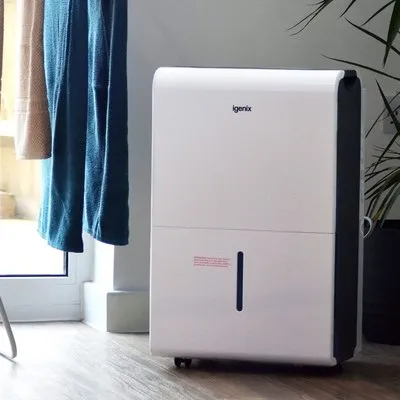
The Best Dehumidifier for Bedrooms
I’m sure most of us will be familiar with the tell-tale signs of damp building up overnight – from condensation running down bedroom windows to damp, musty smells indoors. Unfortunately, these are the first signs of a much deeper problem indoors. One person alone can exhale up to 200ml of water vapour overnight, and in a sealed bedroom with the windows staying closed in the morning, that moisture will attach itself to walls, windows, and curtains if not properly removed.
The team here at National Heater Shops has spent years helping customers deal with their own unique damp challenges at home. We know selecting a dehumidifier moves beyond drying windows, customers are now seeking out dehumidifiers to assist with drying clothes indoors and improving indoor air quality. Selecting a unit that features a sleep mode will be essential for customers looking to create a healthy sleeping environment as most standard models will be too noisy.
In this guide, I will be drawing on our technical expertise and feedback from our customers to cut through the jargon and help you to select the best dehumidifier for bedroom use. I will be focusing on decibel levels (dB) to determine how quiet a unit is, how much it costs to run, unit size, and whether it has features like a night mode that won't disturb you while you sleep.

Key Takeaways: Your Bedroom Humidity Checklist
Here are the essential points to remember when adding a dehumidifier to your bedroom space:
- The Overnight Effect: While sleeping, a single person can exhale up to 200ml of water and with windows staying closed during the colder months, this is the primary cause of condensation on windows in the morning.
- Prioritise the 35–40 dB Range: If it’s too loud then you probably won't end up using it. Invest in a unit that is quiet enough for you to leave running while you sleep.
- Opt for Compressor Technology: Compressor models are cheaper to run and are ideal for rooms where the temperature is above 15°C.
- Target 50% Relative Humidity (RH): 50% is high enough to prevent sore throats and dry skin, and low enough to stop mould and dust mites.
- Placement is Key: To allow the unit to effectively monitor the environment, leave at least 20cm of air clearance around the sensor.
- Modern Features: Instead of drawing power 24/7, a built-in humidistat will cycle the unit on and off only when needed.
Our Top Picks for Bedroom Dehumidifiers
The key to choosing a bedroom dehumidifier is finding one that balances a high enough extraction rate to prevent mould with one that is quiet enough to allow for REM sleep. I have chosen the following three models based not only on their balance of decibel output and rates of extraction, but also on our technical testing and customer feedback.
De’Longhi Tasciugo AriaDry Light DEX214F
I have chosen the De’Longhi DEX214F as it is certified by the Allergy Standards Foundation, making it our top pick for asthma and other allergen sufferers. It operates at roughly 37dB, which is around the noise level you would expect at a library and is recommended for standard bedrooms spaced at 15–20 m².
For bedrooms that double up as rooms used for drying clothes during winter, the DEX214F features a dedicated laundry mode. This product actually came up in conversation over the weekend. After I mentioned it, my mother-in-law was surprised to find the laundry feature after initially being purchased for a dust mite allergy.
Wood’s MDK11 Compact Dehumidifier
Some units struggle to extract moisture from the air when the temperature drops, but the Wood’s MDK11 is specifically designed for bedrooms that are cooler at night. It uses the eco-friendly R290 refrigerant which will future proof the unit from changing environmental regulations.
I would recommend the MDK11 for larger bedrooms and ensuites that deal with never-ending damp patches in corners and ceilings from daily activities such as showering.
Prem-I-Air EH1472 1.9L Smart Dehumidifier
The Prem-I-Air EH1472 stands out in the compact category as it manages to bridge the gap between convenience and basic moisture control. More suitable for problem spots within your home rather than drying a whole room, the EH1472 is best placed in a corner or behind a wardrobe prone to mildew.
During my technical review of the product, I was particularly impressed with the Smart Life App used to control the dehumidifier. This feature would make the unit essential for controlling humidity levels when not physically present e.g a holiday let.
What is the Best Type of Dehumidifier for a Bedroom?
When choosing a dehumidifier for your bedroom, I would argue that the main point you should focus on is its impact to decibel levels (dB). Although not the only point of focus, if it constantly wakes you up, then you simply won’t use it. Secondary to this, you will almost certainly want to focus on running costs and the overall comfort the unit provides.
Having said all of that, when choosing a dehumidifier your starting point should always be the overnight temperature of your bedroom as this will immediately decide which technology you choose.
Compressor Dehumidifiers: Versatile & Energy-Efficient
Compressor dehumidifiers work by pulling in humid air and passing it over a cold coil. This causes the moisture to condense into droplets, these are then collected in the dehumidifier’s water tank.
The feedback I often receive is that these are the units people choose for their bedrooms as for customers, they strike the perfect balance between performance and running costs.
Compressors work best in bedrooms kept above 15°C and are the best cost effective choice for bedrooms consuming significantly less electricity compared to desiccant models.
Desiccant Dehumidifiers: The Winter Specialist
Instead of a coil, desiccant dehumidifiers feature a rotating wheel of an absorbent material such as silica gel to literally suck the moisture from the air. The wheel is then heated and as water is released, it is collected into the tank.
When I think of desiccants, I view them as a dehumidifier for your garage or other poorly insulated area. You’re really only going to select a desiccant for bedrooms where the temperature regularly drops below 15°C or the radiator is always switched off.
Why Do Bedrooms Get Damp and Condensation?
While many people will confuse damp as a sign of a leaking roof or something similar, the majority of the time, damp in the bedroom is caused by interstitial condensation. This is the hidden moisture inside our bedroom walls and is caused when warm, moist air cools to its dew point leading to damp patches and if not treated properly, mould growth.
The 3 Stages of Bedroom Damp
The build up of moisture in our bedrooms usually follow this predictable and damaging pattern:
- Surface Condensation: The moisture that builds up on window sills first thing in the morning is something I’m sure we’re all familiar with and should be viewed as the first warning sign.
- Hygroscopic Absorption: As windows remain shut in the colder months, we deprive our bedrooms of ventilation. The trapped moisture in our rooms is then absorbed by porous materials such as curtains, carpets, mattresses, and other bedroom furniture that leads to the all-to-familiar musty smells.
- Biological Growth: If humidity stays above 60% for prolonged periods of time, mould will begin to grow in corners and behind furniture that result in black spot mould (Aspergillus or Stachybotrys). Extended exposure to black mould can lead to serious respiratory problems, as outlined in UK government guidance on damp and mould.

Why Modern Homes Aren't Immune
When I speak to owners of new build properties, they are often surprised to find damp issues within their homes. As we have optimised our homes for energy-efficiency in the forms of double glazing and cavity wall insulation, we have effectively made our home more airtight and while this keeps the heat in, it also bottles up all that moisture.
How a Dehumidifier Transforms Your Bedroom Environment
The effects can quickly become noticeable once moisture starts to build in your bedroom. To protect your room, I recommend setting your dehumidifier for a relative humidity (RH) of around 45% to 55%. Achieving that balance will disrupt the lifecycle of allergens, promote better sleep, and contribute to your home’s structural health as well.
It’s normally the small changes that people notice the most, things like less condensation and no damp smells both impact a bedroom in a way that makes it feel easier to sleep in.
Managing Laundry in Bedrooms
It’s inevitable in the UK that come winter, we will all be drying our clothes indoors. With a single load of washing releasing up to two litres of water into your bedroom air, I urge homeowners to take the initiative and invest in a dehumidifier that features a laundry mode. Laundry modes work by bypassing the humidistat and running at maximum capacity for a set period, this reduces drying times and stops that moisture getting close to cold window sills.
Once you have invested in the right bedroom dehumidifier, instead of spending the first 10 minutes of the morning wiping down windows, you’ll wake up to clear windows and air that feels light and easy to breathe.
How to Choose the Best Dehumidifier for a Bedroom
In my opinion, it's easier selecting a dehumidifier for a garage or a basement than it is for a bedroom. In a bedroom that is primarily used for sleeping, selecting a dehumidifier for noise control and air displacement are just as important as extraction rates.
Honestly, this is where most people get caught out, a unit that performs well on paper isn’t necessarily going to be the unit that will perform best when you’re trying to get your head down in an evening.
Based on my experience testing various models over the years, here are the guidelines I follow when selecting a unit destined for the bedroom.
The Noise Threshold for Sleep
Ambient noise in a bedroom is typically around 30 dB, adding a dehumidifier that is too loud will undoubtedly wake you up.
- Most units will list their operating levels, find one that operates around 35 dB to 40 dB. For added context, I would say a whisper is around 30 dB while the hum from your fridge is around 40–45 dB.
- Choosing a model with the air outlet mounted on top will direct the noise from the air upward, as opposed to across the room. This will also prevent you feeling the wind as you sleep if the unit is close by.
Matching Extraction Capacity to Room Volume
I would forgive you for buying a unit based solely on how much moisture it can extract per day, but these ratings are often calculated at a certain temperature, which leads to confusion when you suspect your unit is underperforming.
- For a standard double bedroom in the UK (12–15 m²), a 10 or 12 litre compressor unit will do the trick and with enough reserve power to clear condensation in the morning as well.
- If you’re lucky enough to have a walk-in wardrobe, account for that extra air volume by purchasing a unit with a swing louvre. This feature will help circulate air into those hard to reach corners.
Energy Consumption
With energy prices unlikely to fall anytime soon, look for a dehumidifier that features a built-in humidistat. A unit that runs all day and all week long is unnecessary and expensive. A modern, high tech model will sample the air every 30 mins or so to determine if the set target RH has been reached, and when it has, will automatically switch itself off. This could save you up to 30% on your annual running cost compared to a dehumidifier that does not feature this function.
FAQs About Bedroom Dehumidifiers
Is it safe to run a dehumidifier in my bedroom while I sleep?
Modern domestic units are designed for continuous use and often come with multiple safety features such as automatic shut off function to help prevent the tank from overflowing. If you’re concerned about a brightly lit dehumidifier interrupting your sleep, look for models that feature night modes to dim all LED lights.
What is the ideal humidity setting for a healthy night's sleep?
You should be aiming for a target of 50% relative humidity (RH). Above 60% encourages mould spores and dust mites, below 40% leaves the air too dry. Air that is too dry can lead to all sorts of comfort issues, from sore throats to dry skin, so getting it right is essential.
Will a dehumidifier actually stop condensation on my windows?
Yes, but a dehumidifier will only remove the cause which in this case is excess moisture vapour. It won’t fix the structural issues concerning the windows themselves e.g double-glazing seals that have failed.
Your dehumidifier will most likely run constantly during the first few nights of use as it is pulling moisture that is stored deep within your bedroom. Once this deep damp has been removed, the unit will mostly cycle on and off only to remove moisture build up from the windows.
Where is the best place to position the unit in a bedroom?
To answer that question the other way around, I’ll tell you where not to place it; never tuck it behind a curtain or in a corner. For the humidity sensor (or the hygrometer) to function as it should, there should be 20cm clearance on all sides.
Can a dehumidifier replace my heater in the winter?
No, but it can help as dry air is easier and cheaper to heat than damp air. When you’re heating damp air you’re not just heating the air, but the moisture held in too. It will require more energy to heat it as your heating has to work harder and will feel cooler too.
Final Thoughts: Investing in a Healthier Sleep Environment
Dehumidifiers are no longer viewed as just another appliance, they are an essential part of our homes. More than just an inconvenience, the symptoms of damp and condensation are obvious signs that you need to address the quality of the air in your bedrooms.
This isn’t some hard sales pitch but the feedback from customers is always the same, only once the problem is resolved do people understand how much of a difference it actually makes. Cleaner windows and no lingering damp smells all contribute to a comfortable room to sleep in.
Today's units are not only more energy efficient than the predecessors but are designed to work silently in the background, with many units taking up very little space. Addressing humidity today will prevent costly damp repairs and respiratory triggers tomorrow.
Still Unsure Which Model is Right for Your Bedroom?
It can seem overwhelming at first, and hopefully after this guide things make a little more sense. However, if you still have any concerns or any questions that have not been answered then our team of experts is here to help it all make sense.
- View our full range of dehumidifiers.
- Contact our technical support team or use our live chat.