


How to Dry Screed Efficiently: Heat vs Dehumidifiers Explained
Date: 14 October 2025
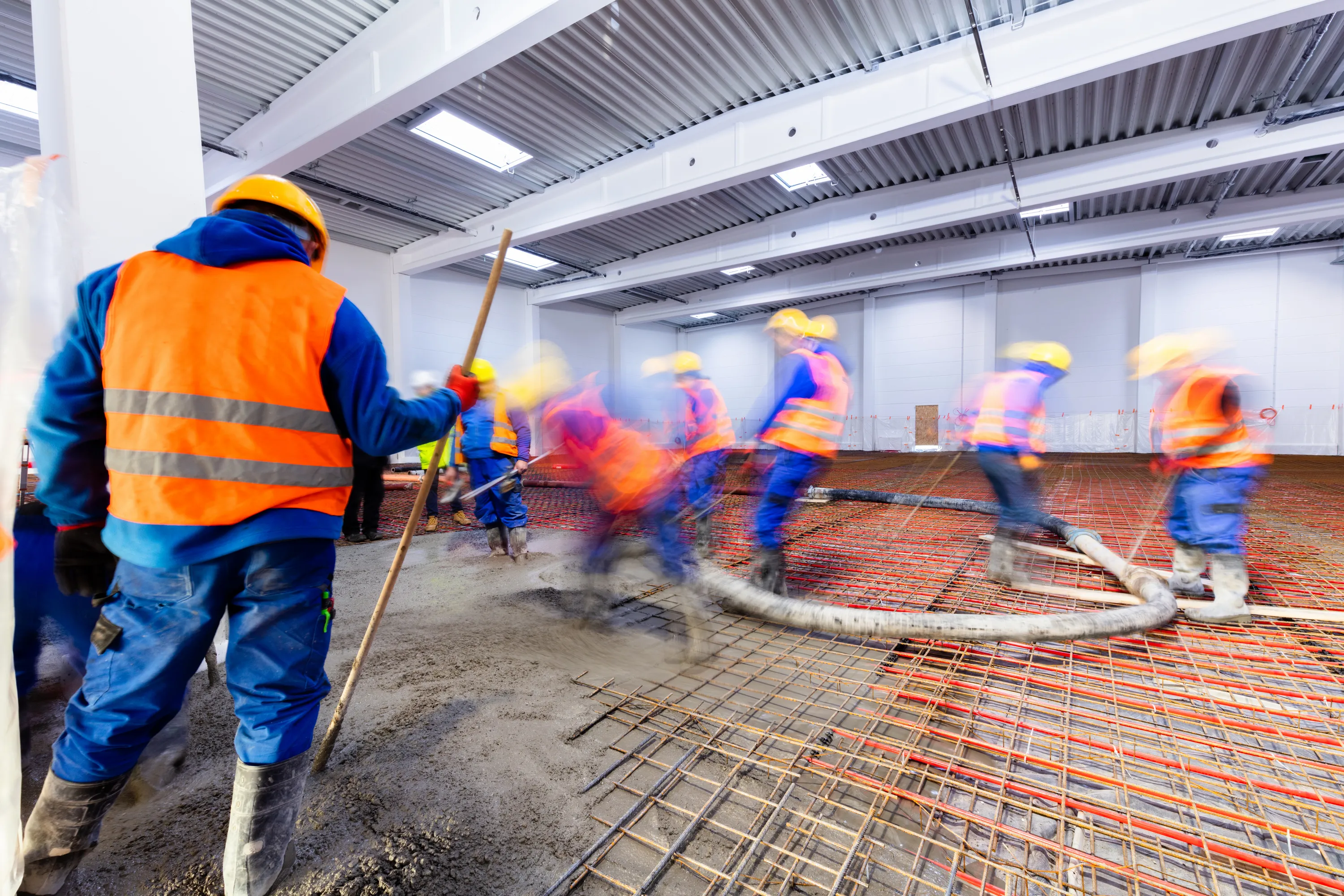
This guide forms part of National Heater Shops’ Smarter Ways to Dry series — a collection of resources exploring how to achieve efficient, controlled drying across construction and restoration projects. Other topics in the series include flood recovery, condensation and mould control, and carpet drying.
Why Screed Requires Controlled Drying
Correctly drying a new screed floor is critical to the success of any build or refurbishment. A floor that dries too quickly risks cracking or curling, while one that dries too slowly can delay subsequent trades and finishing work.
Screed drying depends on a controlled balance between temperature, airflow, and relative humidity (RH). When screed cures, water migrates upwards through the layers. If the surrounding air is already humid, that process slows down. If the space is overheated or airflow is concentrated on one area, the surface can harden while moisture remains trapped below, weakening the structure.
Maintaining stable, moderate conditions throughout the drying period ensures that the entire depth of the screed cures evenly and to the correct strength.
Heat Alone Can’t Complete the Job
Heaters are often used to accelerate the drying process, but heat on its own only takes the process so far. Warm air can hold more moisture, so heating does increase evaporation — but without proper ventilation or dehumidification, the air quickly becomes saturated. Once RH levels exceed around 70%, further evaporation slows significantly.
Excessive heat can also be damaging. When air temperatures rise above approximately 25 °C, screed surfaces can dry faster than the layers beneath, leading to tension, curling, or hairline cracks.
The Role of Dehumidifiers
A dehumidifier removes water vapour from the air, lowering RH and maintaining the right conditions for consistent drying. This makes it an essential part of any controlled drying setup, particularly in sealed or semi-enclosed environments such as basements, extensions, or new builds.
As a general guide, aim for:
Air temperature: 18–25 °C
Relative humidity: 40–60 % RH
Refrigerant dehumidifiers perform best in standard indoor temperatures, while desiccant dehumidifiers continue to extract moisture efficiently in colder conditions — making them ideal for unheated or partially enclosed spaces on site.
For professional use, view our full ranges of Industrial Dehumidifiers, Desiccant Dehumidifiers, and Refrigerant Dehumidifiers, suitable for construction and restoration work.
The Best Setup: Heat + Dehumidifier + Air Movement
For fast, safe screed drying, use a combination of gentle heat, active dehumidification, and consistent air circulation.
Provide moderate heat to promote moisture migration from within the screed.
Use dehumidifiers to remove that moisture from the air and keep RH under control.
Add air movers or fans to distribute dry air evenly across the floor area.
Keep doors and windows closed to prevent new moisture entering, and ventilate briefly only to release saturated air. Position the dehumidifier centrally, with fans circulating air around the space rather than directly onto the surface.
Explore our Air Movers and Building Dryers range to find compatible equipment for construction environments of any size.
Force Drying with Underfloor Heating
Where underfloor heating is installed, the system itself can be used to support controlled “force drying.” The process should be gradual to prevent stress on the screed:
Run the system at a low temperature for 24 hours.
Increase by 5 °C per day until reaching normal operating temperature.
Maintain this level for several days before reducing it again in stages.
Always use a dehumidifier during this process to remove the additional moisture released. In cooler site conditions, a desiccant dehumidifier provides more stable extraction performance than a refrigerant model.
Practical Steps for Site Drying
Record RH readings daily with a reliable hygrometer.
Keep the area sealed to prevent new moisture ingress.
Avoid directing heaters or fans straight at the floor surface.
Use continuous drainage where possible to minimise downtime.
Confirm moisture content using a CM test or digital meter before applying finishes or adhesives.
When to Stop Drying
A screed is considered dry once it meets the manufacturer’s specified moisture level — typically around 0.5 % CM for cement-based or 0.3 % CM for anhydrite screeds. Exact times vary depending on screed thickness, site conditions, and airflow. Always verify results with appropriate testing before continuing work.
Recommended Equipment for Screed Drying
Dri-Eaz BD1000 Desiccant Dehumidifier: Suitable for larger or unheated environments. Delivers consistent extraction performance even at low temperatures, maintaining the right balance of airflow and humidity.
Thermobile BX15 Electric Heater: Provides gentle, even warmth to accelerate the drying process safely.
Arcotherm EC32 Indirect Diesel Heater: A dependable option for larger spaces where indirect heat is required to avoid direct exposure to fumes or moisture.
XPOWER P-800TH Air Mover: Ensures even air distribution, helping to speed up evaporation without over-drying the screed surface.
Together, this combination of heat, dehumidification, and airflow delivers fast, controlled screed drying with minimal downtime.
Key Takeaway
Relying on heat alone can give a false impression of dryness while leaving moisture trapped below the surface. Combining controlled heat, air movement, and active dehumidification provides a faster, more consistent, and safer drying process — ensuring the screed reaches its full design strength and is ready for finishing without delay.
Need advice on setting up a screed drying system? Contact National Heater Shops for expert guidance and a complete range of construction drying equipment, available for rapid UK delivery.