


Infrared Heating That Hits the Spot in Cold Workspaces
Date: 4 June 2025
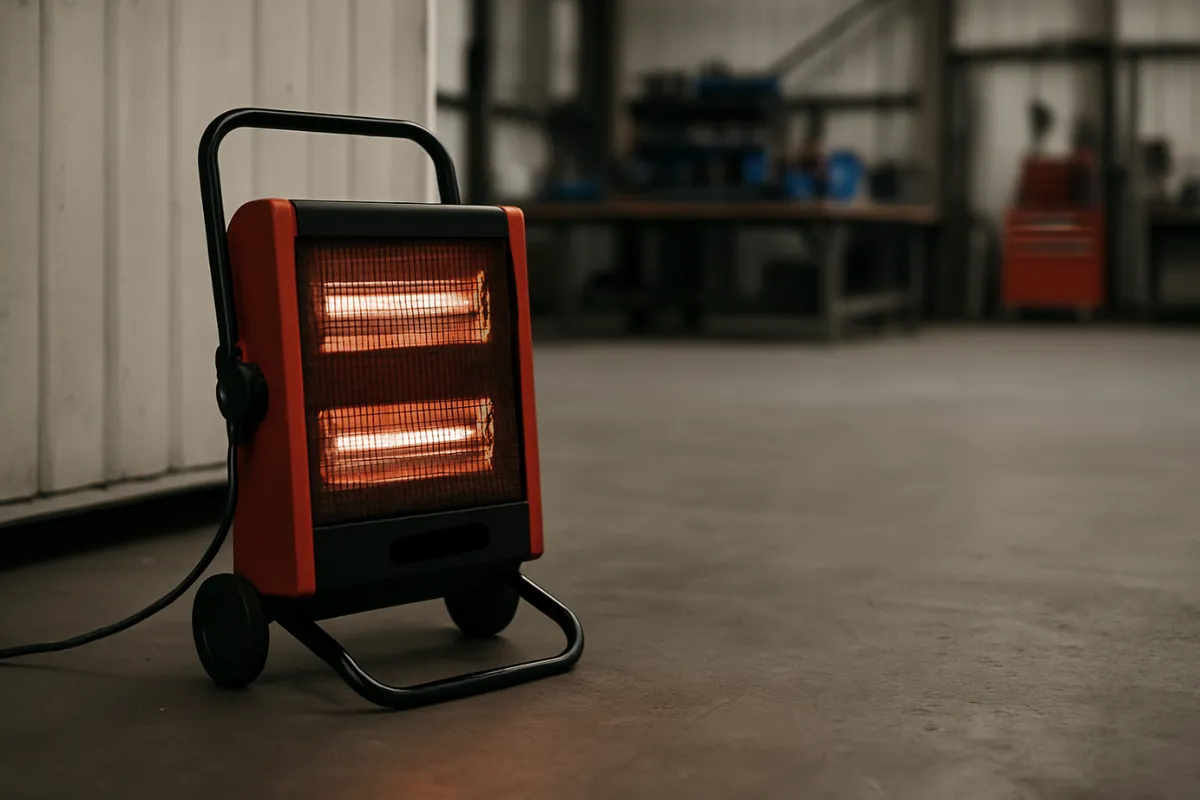
Infrared Heaters for Industrial Workspaces
Industrial Heating: Why Large Spaces Stay Cold
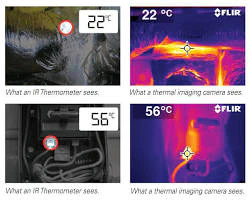
I’ve spent plenty of time in cold industrial spaces over the years. I can still feel that cold air that hits you when the loading bay shutters open first thing in the morning, not to mention the chill that clings to exposed brickwork. The common complaint that comes up time and time again, is that the heating is not heating up the right things.
For example, take your average warehouse with its high ceilings. The problem is that when warm air rises, you’re spending thousands on heating the roof space while the guys on the ground are still wearing their thermals. We need to think about how we balance keeping the workforce warm with the operational cost.
Direct Heat in Demanding Conditions
The strategy here is to warm people and surfaces instead of every cubic metre of air. Infrared delivers radiant heat and directs it towards people, tools and floors. We commonly use it for spot heating. So instead of wasting money keeping racking, that is several levels up warm, you can focus heat in the direction of the packing bench.
In this guide, I will be breaking down the advantages of using radiant heat and recommending units that have been tested in these conditions.
Matching the Technology to the Environment
The most expensive mistake you can make when it comes to industrial heating is to calculate the square footage. When it comes to infrared, we are calculating thermal density directly to the point of labour. It’s here where we need to look beyond the spec sheet in selecting the right system and evaluate the thermal behaviour of the space.
The Fuel Choice: Diesel vs. Electric
The choice is not only between cost, you should ask yourself if the unit needs to be portable or will it be installed in a fixed location.
- Diesel Infrared: These are the workhorses. I find diesel units perfect for the heavy lifting needed around loading docks. They offer a huge BTU output without needing to remain in a fixed location. They provide a thermal curtain for workers and protect against drafts from open shutter doors.
- Electric Infrared: These are the precision tools for heating. A 2kW-3kW heater provides instant comfort. They’re also the only viable choice for strict CO2/emission monitoring.
The Physics of Placement
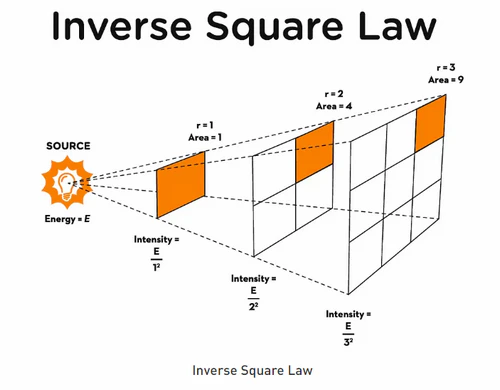
Understanding the Inverse Square Law is the expertise in infrared heating. For example, if you double the distance between yourself and the heater you don’t get half the heat, you actually get a fourth.
We look at three variables when specifying power output (kW)
- Mounting Height: Mounting a heater high up requires a lamp usually around 4kW+, so mounting a 1.5kW 5 metres up is useless as it won’t penetrate the air.
- Thermal Throw: Understanding the sweet spot of a diesel’s throw range is essential for safety and comfort. This is usually somewhere between 3 to 7 metres from the unit.
- Duty Cycle: Decide whether or not this will be a permanent installation. For a production line running 24/7 you’re going to opt for a permanent electric option, for a 2 hour maintenance shift in a cold corner of a warehouse, most likely a portable diesel.
Mobility vs. Fixed Infrastructure
Flexibility is a form of ROI in facilities management.
- Fixed Systems: When workstations are fixed or when floor space is tight, mounting on the wall or ceiling is often the best approach.
- Portable Systems: When the work moves, then so must the heat. Essential for maintenance teams.
My tip is to stagger the position of a fixed electrical unit to create overlapping zones. This helps to get rid of cold spots for when workers move around, they have total coverage.
Environmental Resilience
Infrared is the only effective technology in drafty areas such as frequent door openings. Unlike convection, infrared heats up the person instantly.
The Air-Heating Paradox: Combustion vs. Ventilation
Traditional forced air systems are the best in raising the temperature in a sealed environment. Unfortunately, they often fall short when faced with the realities of an industrial site. It’s important for both safety and fuel efficiency to understand the differences between the two.
High-Efficiency Ventilation Heating
Direct Fired Heaters are essentially an open flame within an airstream. As almost all of their energy is converted into heat, they are nearly 100% efficient at heating spaces. Unfortunately, that efficiency does come with a trade off: combustion by-products.
- The Risk: They release carbon monoxide and moisture directly into the air.
- The Application: They are strictly for highly ventilated or open air environments.
It should go without saying, but you should never use a direct-fired unit in a sealed environment due to the emissions. If you factor in the moisture build up too, this can cause issues with sensitive machinery and stock as well.
Clean-Air Solutions for Enclosed Spaces
Indirect Fired Heaters work by keeping the flame and exhaust separate from the air being pushed into the space you are trying to heat. This gives you clean, dry heat and is suitable for marquees and other events.
- The Efficiency Gap: Your fuel costs are higher due to around 20% of the energy being lost through the chimney.
- The Reliability Factor: They’re more complex. Units that aren’t serviced frequently can lead to the heater shutting down before the space is heated (short cycling).
Why Air-Based Systems "Fail" in High-Bay Units
Thermal buoyancy is the limitation of both systems. By the time the air reaches 28°C in a 10 metre high ceiling, for workers on the floor the temperature will be closer to 12°C. Then every time a shutter door is opened out goes the warm air you’ve just paid for.
However, I rarely advise replacing these systems entirely. Strategic placing of infrared heaters above workstations is usually the most cost effective solution.
Infrared Heating: The Precision Engineering of Comfort
Fixing cold corners is about changing how we heat. Traditional systems waste energy by warming the air, infrared directly warms the workspace. If you remove air from the equation, you eliminate the biggest source of heat loss in an industrial setting: drafts and air movement.
The Physics of Radiant Transfer
By emitting electromagnetic waves, the heat from infrared travels in a straight line until they strike an object or person. This energy is then absorbed and converted into heat.
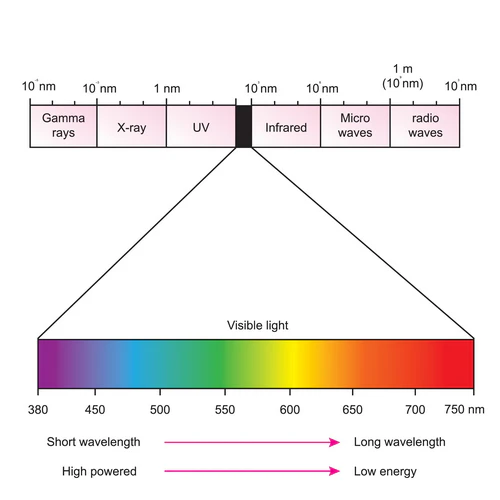
Infrared is an instantaneous energy transfer, unlike convection which relies on a loop of air rising and falling.
If you’re interested in taking a deeper dive into the science, Phormalab has created some facts you didn’t know about Infrared Heating that help to explain its invisible nature.
Why "Spot Heating" is a Strategic Advantage
The all or nothing approach to heating large industrial sites, in my opinion, is the primary cause of soaring utility bills. By using infrared for zonal control, you give yourself three advantages.
- Thermal Inertia: When radiant heat warms floors and tools, these objects act as secondary emitters and help to maintain a comfortable temperature.
- Psychological Comfort: As it mimics the sensation of the sun, workers often feel more comfortable at lower temperatures. You can then set the building thermostat lower while keeping the workforce happy.
- Mitigating the "Shutter Door Effect": There's nothing worse than when those doors go up on a cold day. Fortunately, radiant heat sticks to surfaces keeping your workers warm.
Industrial-Grade Benefits
There are however specific realities that make infrared essential for the shop floor. No fans are involved, so infrared is the only choice for when dust circulating poses a threat to precision instruments. They’re reliable and low maintenance, and with a start up time close to zero, infrared reaches its peak output within seconds of being switched on.
The Power of Choice: Electric vs. Diesel
Electric infrared is best for fixed positions. It’s clean, quiet and the most sustainable option. Diesel infrared on the other hand is the best solution when you’re off grid.
Creating a Hybrid Thermal Environment
The best heating strategy lies in hybrid thermal design. Protect your building's fabric by using your primary air based system, and use infrared to keep workers at a comfortable temperature.
Balancing Baseline vs. Comfort
For preventing damp and protecting stock, direct and indirect heaters are the go to choice for most. They’re best at preventing frost and maintaining an ambient baseline temperature (typically between 12°C and 15°C).
However, this is not comfortable for workers. So instead of cranking up the heat and losing most of it through the roof, use infrared to bridge the comfort gap.
The Benefits of Decoupling
You gain several advantages by decoupling your workstation heat from your building’s heat.
- Reduced Mechanical Strain: Stop chasing cold spots with your central heaters and reduce the duty cycle of your main burners.
- Thermal Precision in Dynamic Layouts: Simply relocate your infrared heaters if you need to move an assembly line.
- Fix the Micro-Climates: Every warehouse has them. Wind tunnels or ice box corners, you can use infrared to cut through these micro-climates.
Identify the High-Impact Zones
This is all about strategic placement, I recommend using infrared integration on:
- Transit Points: Forklift traffic makes air heating in these spaces impossible.
- Low-Activity Zones: Where staff are stationary and more susceptible to the cold.
- Ceiling voids: Where traditional heat has gathered far above floor level.
I always encourage people to think of your heating system like lighting. For the whole room you have ambient light, but you have task lighting for the work at hand. In an industrial environment, think of infrared as task heating.
The Most Reliable Infrared Heaters for 2026
Understanding the thermal profile of your environment is the key to selecting the right industrial heater. Factors such as air change rates and thermal mass, will decide whether a unit is successful or not.
The Best Solution for Dust-Sensitive Workshops
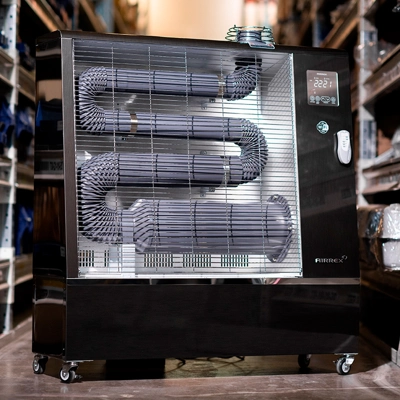
A diesel fuelled infrared heater, the Airrex AH-800i is perfect for small workshops and garages. To get rid of the burning smell, these units use ceramic coated pipes and keep air movement to a minimum (great for dust sensitive tasks). And as infrared heats objects instead of the air, you won't lose the warmth when you open the garage door either.
High-Intensity Radiant Heat for Loading Docks
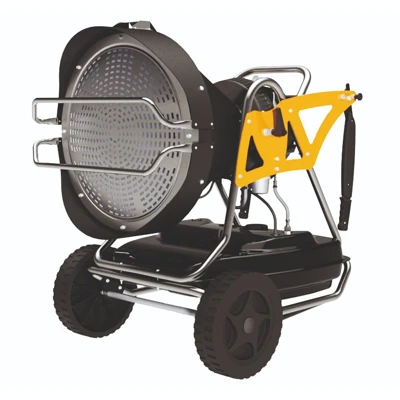
I recommend the Master XL91 for buildings with high ceilings and large industrial bays. These short wave heaters penetrate the air with high-intensity, radiant heat. They are my go to for the constant drafts felt in and around loading docks.
Essential Features for Portable Site Heating
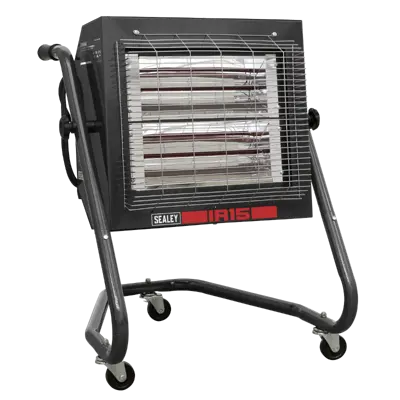
The Sealy IR15 is a 110V/230V portable unit and is great for maintenance teams on the move. Two essential features to look out for when purchasing a mobile unit: first a tilt switch, this will detect when a device is no longer upright, and protect you and others against accidental fire; second, robust wheels, plastic castors will start to crack within hours on the job.
Low-Maintenance "Soft" Heat for Long Shifts
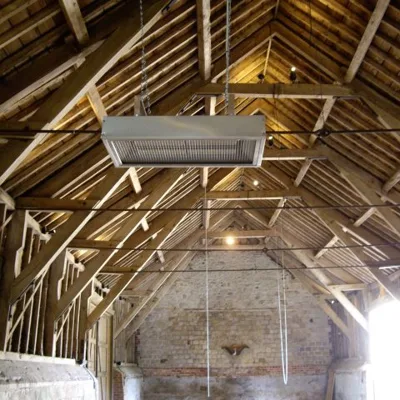
The Herschel IRP4 uses long wave infrared and is more easily absorbed by the body. For shift works, these provide a softer, more comfortable heat. With no filters to change and no fuel to top up, they’re very low maintenance too. And if emission or noise are an issue, electricity is the only way to go.
Making Infrared Heating Work for Your Facility
It’s easy to fall into the trap of thinking that if your building is cold, you need to turn the heat up. In reality, the better placement of heaters is really what you should focus on. Before investing, you should identify your high-occupancy zones, and use infrared to patch these zones where people are actually standing.
- Mounting Height Matters: If a heater is mounted too high, the effects will not be felt on the ground.
- Reflective Loss: Be aware that infrared reflects off of shiny surfaces such as polished metal or glass, which can reduce efficiency.
The Bottom Line on ROI
In my experience, the switch to infrared typically results in a 20-40% reduction in energy costs. When installing fixed units, you should always pair them with a PIR sensor. These sensors act as a light switch for the moment a worker reaches the core of the sensor, switching off again when they leave.
Frequently Asked Questions
Do infrared heaters work in draughty industrial spaces?
Yes. This is their primary advantage, by warming people and objects and not just air.
Are infrared heaters expensive to run compared to fan heaters?
While the hourly fuel rate is roughly the same, the operational efficiency is often much higher. As infrared provides instant heat, you can often bring costs down by 25% to 40%.
Can I use Infrared with existing heating systems?
You can use traditional heating to protect the building from dampness. Then use infrared to warm workstations and people.
What’s the difference between electric and diesel infrared heaters?
Electric is best for permanent installations, while diesel is best for construction sites and loading bays.
How do I choose the correct infrared heater size for my workspace?
Sizing is calculated by the Inverse Square Law: if you double the distance between the heater and the worker, you will lose 75% of the heat. We recommend mapping your floor based on where people stand the most.
Ready to Eliminate Cold Zones?
Our technical team can help you select the right industrial heater for your environment. You can speak to our heating experts today or view the full catalogue.