


Why Portable Air Conditioners Are The Perfect Cooling Solution for Heat Waves
Date: 3 June 2025
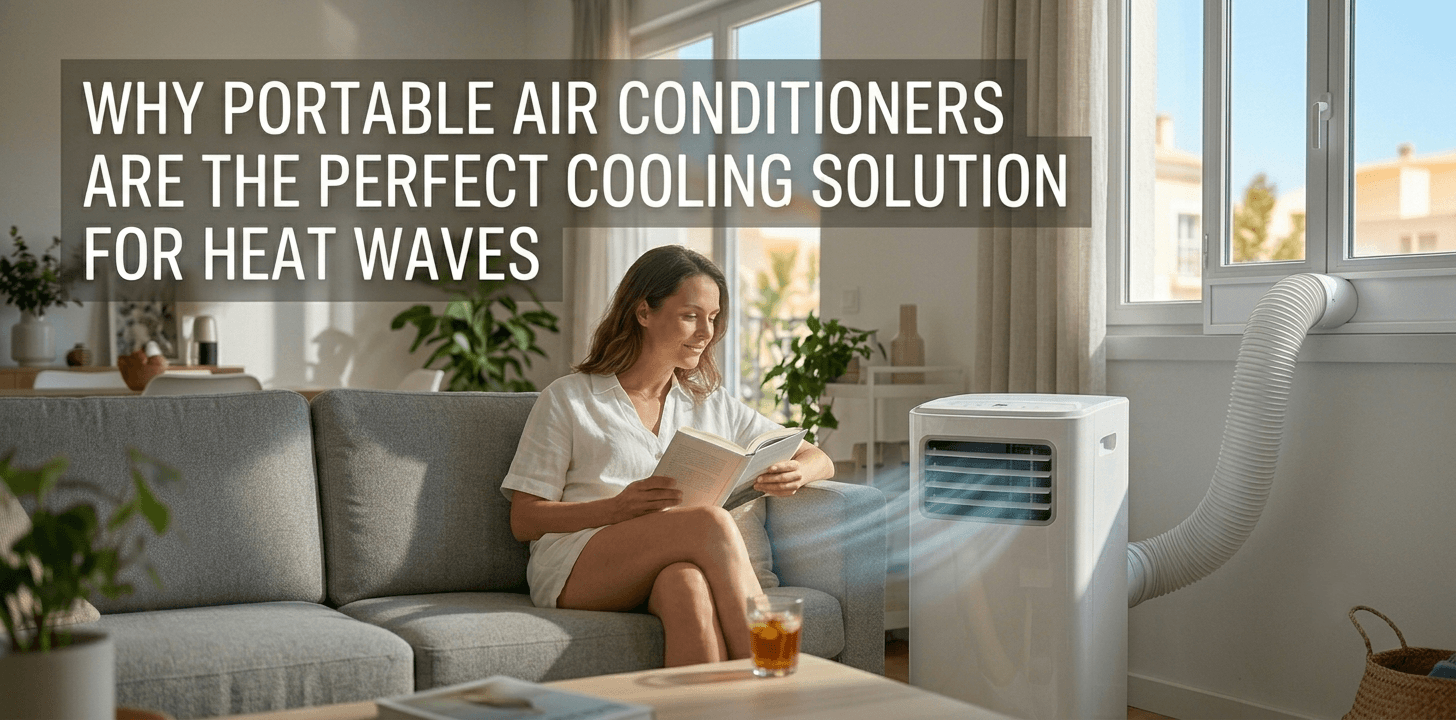
Summers in the UK are getting hotter. In 2025, the UK had its hottest heat wave ever, and weather forecasts for 2026 suggest the UK is in for another hot summer. With heatwaves becoming more common, fast and effective cooling solutions become a necessity.
Portable air conditioners are a great cooling option during heatwaves that are cheap to install and take up little space. By combining the cooling power of traditional air conditioning systems with the portability of cooling fans, portable air conditioners can deliver fast and flexible cooling.
Throughout this article, we will show you how portable air conditioners could be the best cooling solution for you during a heat wave. So, if you are looking for a fast and flexible cooling solution ahead of the upcoming summer season, look no further than our range of portable air conditioners.
Why Portable Air Conditioners Are Perfect for Heat Waves
Portable Air Conditioners Provide Real Cooling
When heat waves hit, you want to reduce the temperature as quickly as possible. Portable air conditioners excel at doing this. Unlike cooling fans that just move hot air from one part of the room to another, portable AC devices actively cool hot air using refrigerant technology.
In the portable air conditioner vs fan debate, portable AC devices go above and beyond in the indoor temperature control category. Portable air conditioning offer:
Real heatwave cooling.
Indoor air conditioning and purification.
Comfortable cooling at night.
Cooling when opening windows is not sufficient.
Quick and Easy Setup
Heat waves happen unexpectedly, leaving you with little to no time to. When temperatures suddenly rise, you need a cooling solution that reduces indoor heat and is quick to install.
Fortunately, portable air conditioners meet all these criteria. Portable air conditioners have the following advantages when it comes to setup and installation:
No major building remodelling needed – Portable air conditioners do not require holes made in the wall for refrigerant pipes or unit mounting.
Plug-and-play capability – Most portable air conditioning units are plug-and-play out of the box.
Simple venting – Portable air conditioning units usually come with window venting kits that are easy to install.
Great for Renters and Temporary Spaces
Portable air conditioning units are perfect for cooling in spaces where permanent cooling systems cannot be installed. This makes it perfect for:
Renters
Temporary spaces
Office blocks
Apartments
Features of portable air conditioners that make them perfect for temporary spaces include:
The ability to move it from room to room. This lets you use it exactly where you need it.
No structural changes are needed for installation, making it ideal for spaces where landlords do not allow permanent structural changes.
Provide Cooling for Rooms You Actually Use
You can prioritise cooling for spaces where you need it. Cooling specific rooms only lets you save on energy costs and means you get more efficient cooling where you need it.
The mobility of portable air conditioners makes them ideal for cooling bedrooms at night and home offices during the day. It is also a great option for small commercial offices seeking a cost-effective climate control solution. Portable air conditioners can be moved into specific offices that need instant cooling.
Reduces Humidity
A characteristic of heat waves that makes spaces extremely uncomfortable is increased humidity. Increased humidity can make rooms feel stuffy and make heat feel even more stifling. Air conditioners are great climate control solutions in areas with high humidity, as they reduce the moisture in the air during the cooling process.
Like fixed air conditioning systems, portable air conditioners increase comfort during humid summer heat by removing moisture from the air it draws in.
Best Use Cases for Portable Air Conditioners During a Heat Wave
Bedrooms
Why portable air conditioners work for bedrooms:
Reduces the ambient temperature of the room, increasing night-time comfort and sleep quality.
Portability means multiple rooms can be cooled before bedtime.
Many portable AC devices have bedroom-friendly features like timers.
Considerations:
Portable air conditioners are louder than fixed, split systems. This is because all the components are housed in a single unit within the room. If noise is a major consideration for you, look for portable AC devices with a low-noise function.
It takes up floor space, making it less suitable for small bedrooms.
Home Offices
Why portable air conditioners work for home offices:
Allows you to maintain a comfortable temperature during working hours, improving productivity.
Ideal for small rooms and studies with computers, screens, and direct sunlight.
Provides flexibility for remote workers.
Considerations:
Look for portable air conditioning units that have a remote control for ease of use.
Portable air conditioners must be placed near a window for the venting hose, so ensure that your home office space has a window.
Living Rooms
Why portable air conditioners work for living rooms:
Provides efficient cooling for family rooms and spaces.
Allows for quick and efficient cooling during peak afternoon heat.
Considerations:
Family rooms tend to be larger than bedrooms, so you need to ensure that the cooling out (BTU) of your portable air conditioner matches the larger size of your living room.
Flat and Apartments
Why portable air conditioners work for flats and apartments:
Does not require permanent installation or major alterations. This makes it the perfect solution for rented properties or properties where making major structural changes is not possible.
Works effectively for small flats and apartments that have limited or poor airflow.
Portability means that you can take your portable air conditioner with you if you need to move to a new apartment.
Considerations:
Portable air conditioners can only cool one room at a time. If you are looking for a cooling solution to cool your entire flat or apartment, a fixed air conditioning system would be a better solution.
Ensure that the cooling output (BTU) of the portable air conditioner matches the size of the room you want to cool.
Consider noise levels, as portable air conditioners are generally noisier than fixed air conditioning systems.
Tips for Choosing the Best Portable Air Conditioner During a Heat Wave
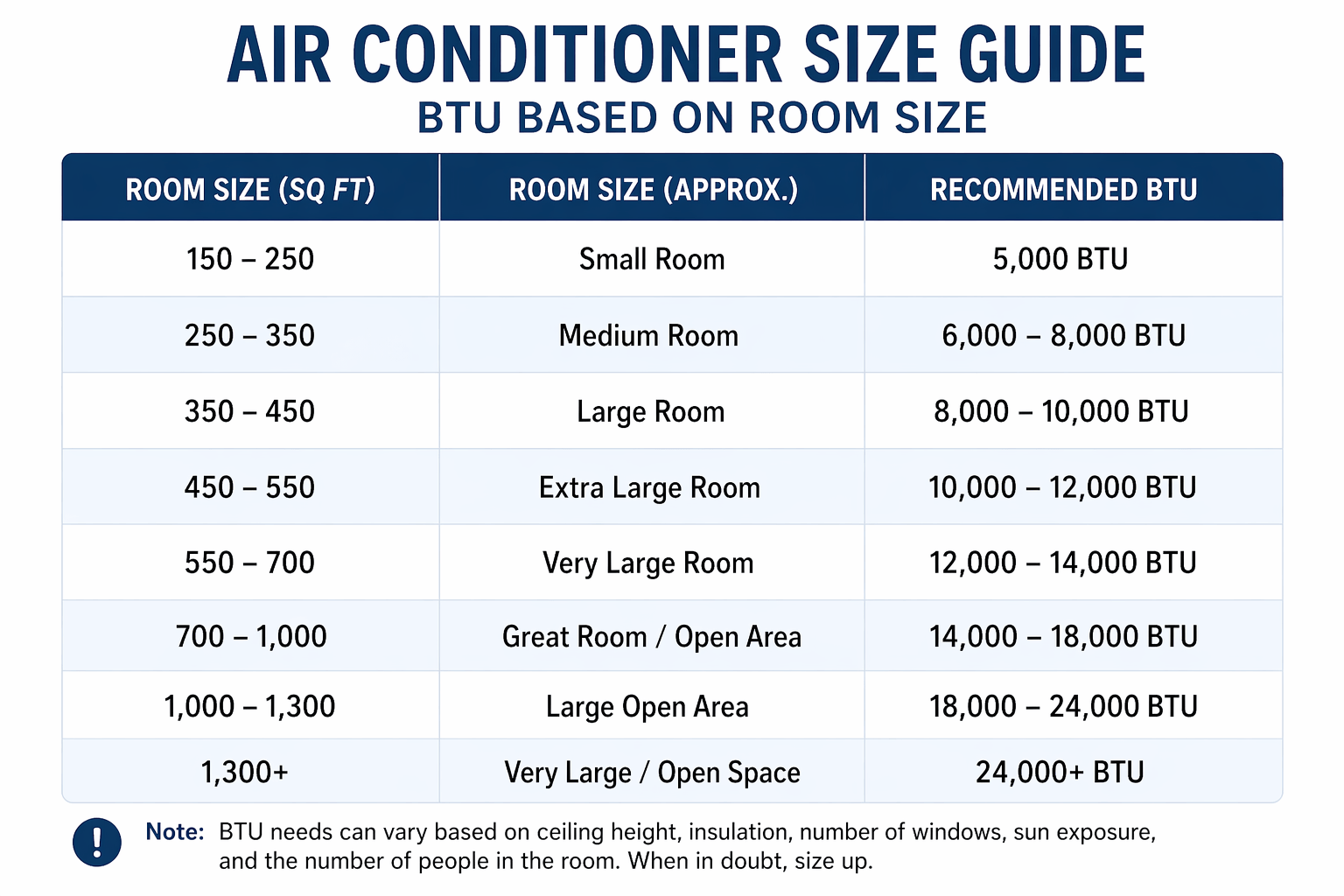
Match BTU Rating to Your Room Size
BTU (British Thermal Units) is a measurement of a cooling device’s cooling capacity. The BTU rating is a guideline for the amount of airflow an air conditioning system produces. Units with higher BTU ratings can cool larger rooms. See below for a BTU sizing guide:
Compare Energy Efficiency
The rising cost of living has led to energy prices skyrocketing. Because of this, energy efficiency is an important factor when choosing a portable air conditioner. Our recommendations for choosing a portable air conditioner that is effective and energy efficient are to look for the following features:
Energy-saving modes
Programmable timers
Thermostat Control
Economy Mode
We also highly recommend buying a portable air conditioner with the correct BTU rating for your room size. Also, ensure that the room you are using the portable air conditioner in has good insulation and window sealing, as this will prevent the loss of cooling power and lead to increased power consumption.
Check Noise Levels
The UK has strict indoor noise-level regulations for spaces like bedrooms and offices. These regulations are put in place to ensure personal comfort in residential settings and maximum productivity in commercial spaces.
For bedrooms, you want to select a portable air conditioner that has a low-noise setting and sleep mode. This will ensure your bedroom maintains a quiet and comfortable atmosphere during heat waves.
For commercial spaces and offices, we recommend buying a portable air conditioner that operates between 45 dB and 55 dB.
Decide Between Single-Hose and Dual-Hose Models
Single-hose portable air conditioners draw air in for cooling and vent heat out through a single hose. It does this by first drawing in hot air from outside, running that hot air through the cooling system, and then venting the remaining heat back out through the same hose. Single-hose units work best for smaller rooms like bedrooms and home offices.
Dual-hose portable air conditioners have both an intake and exhaust hose, making the cooling process more efficient. It draws air in for cooling through one hose and vents hot air out through the other. Dual-hose units work best for larger rooms and faster cooling.
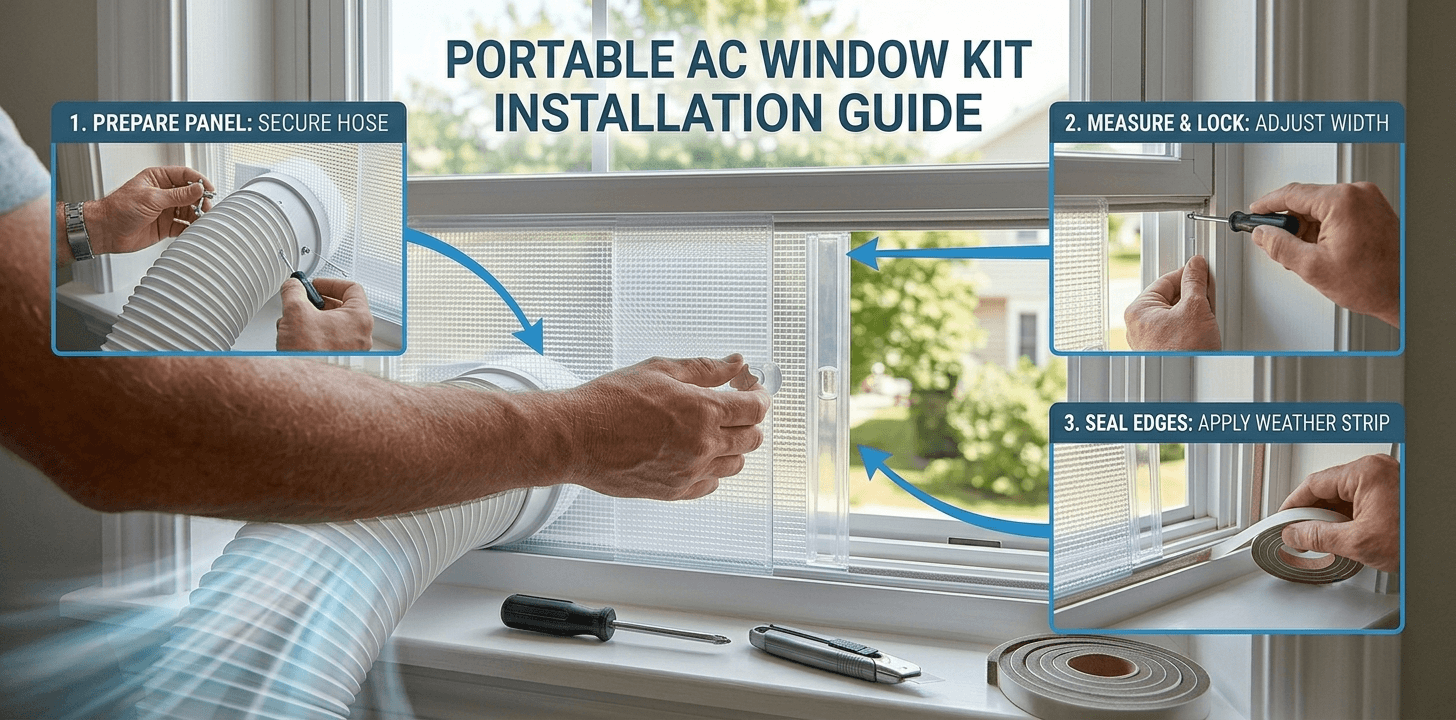
Check the Window Venting Kit
Whether you opt for a single-hose unit or a dual-hose unit, all portable air conditioners require window venting. For efficient venting, portable air conditioners are usually supplied with a window venting kit. These kits are easy to install and provide a sealed vent for the unit’s hose. When choosing a portable air conditioner, it is important to consider whether the window venting kit supplied will be compatible with your window type. You also need to check the quality of the seal to ensure there are no air leaks.
Consider Drainage Requirements
Portable air conditioners use a refrigeration system to cool hot air. In this system, the hot air is passed through an evaporator coil. Heat is removed from the air by the refrigerant gas during this time. During this process, excess moisture accumulates in the unit and must eventually be drained.
Some portable air conditioners can collect the excess moisture and reuse it to cool the compressor. These are known as self-evaporating systems. The advantage of this system is that no manual drainage is required.
Units that do not have the self-evaporating system will generally either have a condensate tank that collects the excess moisture or a continuous drainage system. For units with a condensate tank, manual drainage is required. How often drainage is required will depend on the condensate tank size.
Decide on Convenience Features
Modern portable air conditioners have a host of features that make their usage more convenient. These features include:
Remote Control
App or Smart Controls
Timer
Sleep Mode
Multiple Fan Speeds
Auto Restart
Washable Filters
Caster Wheels
Handles
Compact Design
Things to Avoid When Buying a Portable Air Conditioner
Buying a Unit That is Too Small
A unit that is too small may need to run constantly, resulting in higher power consumption and a shortened lifespan of the unit. It may also struggle to cool effectively during peak heat or when heat waves are bad. We recommend that you measure the space you need to cool so that you can properly match BTU to room size and heat load.
Not Checking Window Venting Requirements
Always check the window venting kit that comes with the portable air conditioner before purchasing, and ensure that it matches the window type of the space you need to cool. Failing to do so can result in poor venting, which can reduce the overall performance of the unit.
Ignoring Noise Requirements
It is important to check the unit’s decibel rating and noise settings before buying, as indoor noise regulations are very strict throughout the UK. For bedrooms and offices, it is recommended that your portable air conditioner operate between 45 dB and 55 dB, and has a low-noise or sleep mode setting.
Buying One Unit to Cool an Entire House
Portable air conditioners are spot cooling solutions that are suited to single-room cooling. For larger, open-plan homes, wall-mounted air conditioners with a higher cooling capacity would be more effective.
Portable Air Conditioner Buyers Guide Checklist
Buying Factor | What to Check |
|---|---|
BTU output | Make sure the BTU output matches the size of the room you are cooling. |
Room size | Measure the space you need to cool to know how much cooling you need. |
Noise level | Ensure the noise output (dB) is suitable for the space you are using the unit in. |
Energy features | Look for energy efficiency features like eco mode, timers, and an adjustable thermostat. |
Window kit | Confirm that the unit’s window kit is compatible with your window type. |
Hose length | Ensure the exhaust is long enough to reach from the window to where the unit is going to be used. |
Drainage | Check the device’s drainage requirements and method. |
Portability | Review the unit’s portability features, like caster wheels and a carry handle. |
Warranty | Review the manufacturer’s warranty policy. |
Reviews | Read reviews of the unit to assess its real-world performance. |
Is a Portable Air Conditioner Worth Buying for a Heat Wave?
Portable air conditioners provide effective cooling during summer heat waves. One advantage of portable air conditioners is that they actively reduce indoor temperatures instead of just blowing around air. These cooling units do not require permanent installation, making them the perfect cooling solution for renters or anyone who needs targeted cooling in temporary spaces.
If you are looking for a flexible cooling solution ahead of the next heat wave, we recommend browsing our portable air conditioner section and choosing a unit that matches your room size, window type, and noise requirements.
For additional cooling options, check out our cooling section, where you can find many different cooling options to keep you cool during a heatwave. From wall-mounted air conditioners and evaporative air coolers to cooling fans and packed terminal air conditioners, we have a solution for all climates and cooling needs.
Frequently Asked Questions About Using a Portable Air Conditioner During Heatwaves
Do portable air conditioners work well during a heatwave?
Portable air conditioners are a great way to provide effective cooling quickly and without the need for permanent installations during a heat wave. They are especially effective for spaces where fixed or wall-mounted air conditioning cannot be installed, such as bedrooms, home offices, flats, and rented properties.
Are portable air conditioners better than cooling fans?
Unlike cooling fans that only move air around the room, portable air conditioners use a refrigerant cycle to reduce the temperature of the space.
Is it necessary to place a portable air conditioner close to a window?
Portable air conditioners must be placed close to a window so that the exhaust hose can be placed through the window to vent hot air outside. This is done with the aid of a window venting kit that must be installed in the window frame.
What size portable air conditioner do I need?
The size of the portable air conditioner depends on the size of the space you need to cool. Generally, small spaces require units with BTU ratings around 7000-8000 BTU, while larger spaces require units with BTU ratings around 12000-14000 BTU or higher.
Is a portable air conditioner suitable for bedroom use?
Portable air conditioners are suitable for bedroom use, especially in flats or rented homes. Modern units are quiet and have features like sleep mode, timer settings, and variable fan speeds.