


Buying Guide for the Best Portable Air Conditioner in the UK
Date: 5 November 2024
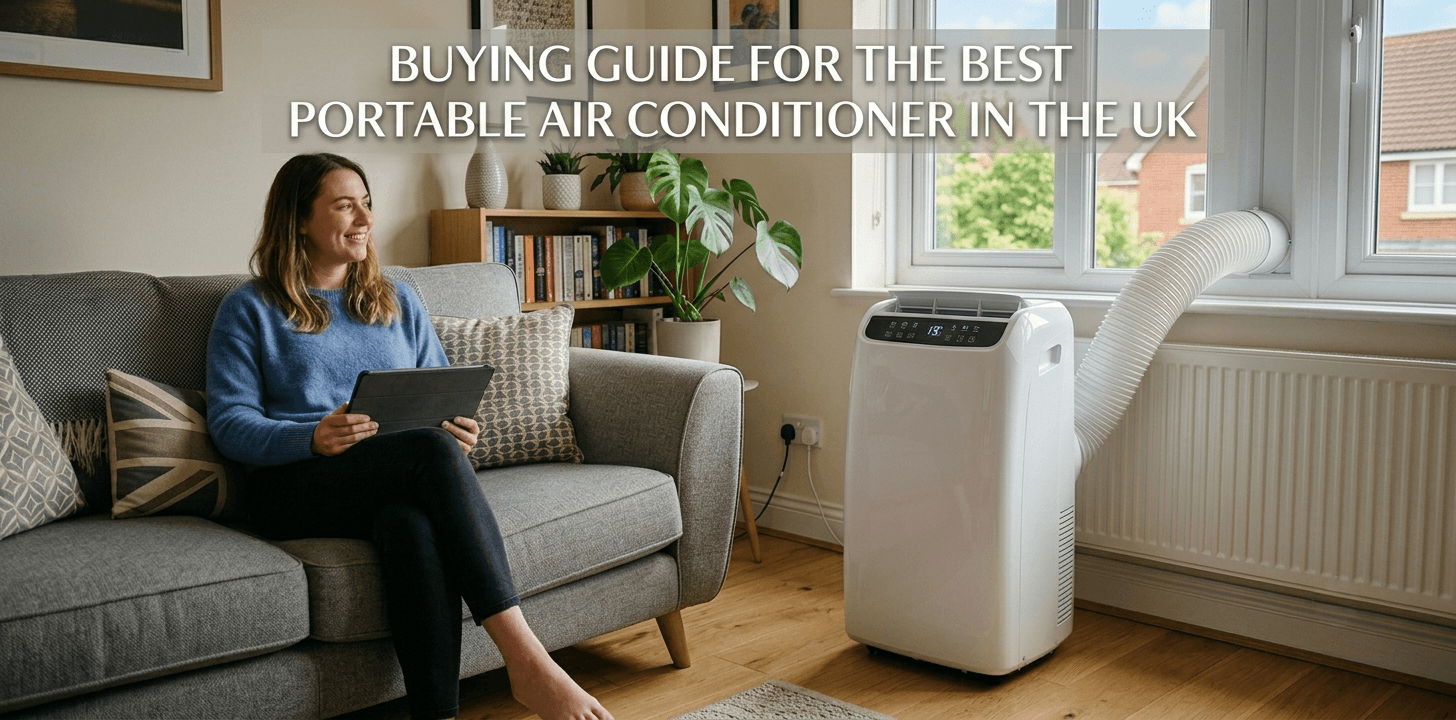
A great way to stay cool in the summer heat is to use an air conditioner. Modern window-mounted air conditioners have become the gold standard for cooling, but cannot be installed in smaller spaces. This is where a portable air conditioner can be useful. These units can be used to cool small spaces and are relatively cost-effective.
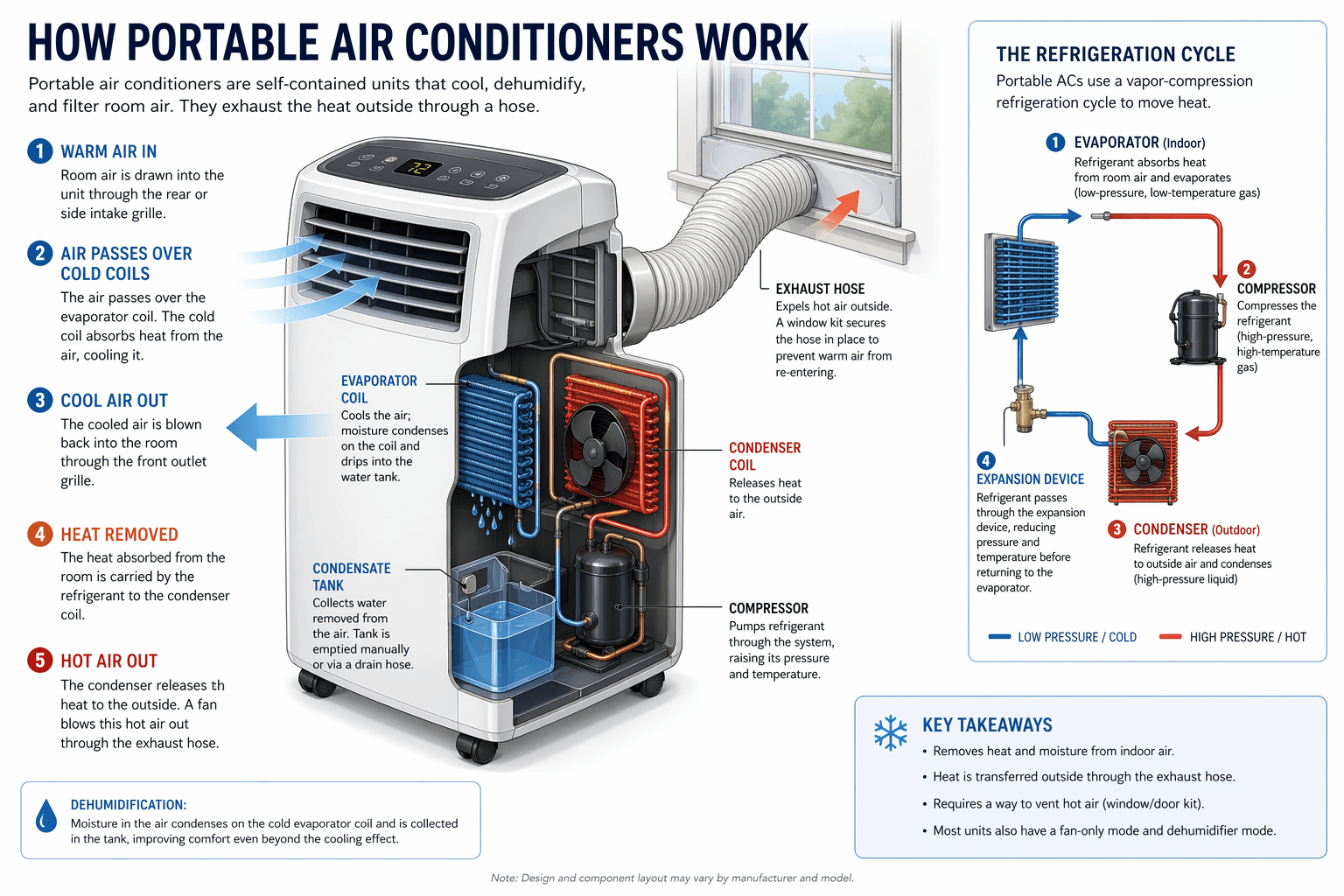
Portable air conditioners provide a cooling solution for spaces where large wall-mounted or window air conditioning units cannot be installed. It does this using an all-in-one design that features an air intake system, a refrigerant system, and an exhaust hose. Unlike traditional air conditioning systems, portable air conditioners work by drawing in air, passing that air over a cold evaporator coil, and then venting that air back out into the room.
Primary Benefits of Portable Air Conditioners
No Permanent Installation
Traditional air conditioning units require major alterations to the existing structure of the space in which they are being installed. This often results in a large hole in the wall that is left, even after the unit is removed.
No alterations or renovations are required for a portable AC unit. These are ready to use out of the box, with the only requirement being an outlet for the exhaust hose.
Mobility Between Rooms
Most modern portable air conditioners for apartments and offices can be moved from room to room with the greatest of ease. Every portable AC unit we sell at National Heater Shops features caster wheels on the base, making moveability extremely easy.
Lower Upfront Costs
Because no permanent installation is required, the only cost associated with portable air conditioners is the purchase price.
Portable Air Conditioner Downsides
While portable air conditioners provide many benefits, especially for smaller spaces, there are some drawbacks to using them when compared to traditional air conditioners.
Noise Levels
Portable air conditioners are louder than traditional wall-mounted units. The reason for this is the self-contained nature of the device. Portable air conditioners are single-unit devices, meaning that components such as the compressor and fans are housed in the room with the unit. These components are known for being noisy, at times producing up to 70dB. Traditional wall-mounted units generally have these components housed in a separate unit on the outside of the building.
Window Venting
Because portable air conditioners do not have exterior cooling and venting units, the unit must vent excess hot air via an exhaust hose. Excess hot air must be expelled somewhere, and in most cases, this means sticking the exhaust hose out by a window. The drawback of this is a window that is permanently open, causing a draft. If you want to avoid this, consider creating a special exhaust hose cutout, but be aware that this will mitigate the unit’s portability.
Does not Work Well in Large Spaces
Portable air conditioners work less efficiently in large spaces due to reduced cooling capacity. Instead, these devices are created for spot cooling. If you need a portable air conditioner for a large space, consider buying one with a higher BTU rating (cooling output). Units with high BTU ratings will, however, be more costly to run as opposed to smaller, cost-effective portable air conditioners.
Explaining How Portable Air Conditioners Work
The Cooling Process
Portable AC units use a closed system to cool the air. It does this by means of the following process:
Hot air from the room is drawn in and passed over evaporator coils.
The coils, which are colder than the air outside the unit, cause condensation to form.
This condensation removes moisture from the air drawn in.
While this is happening, the heat is then transferred into the refrigerant liquid at high temperature.
The air is then cooled down and blown back into the room.
Heat is then vented out of the system via the exhaust hose.
The Exhaust Hose
Exhaust hoses play an important role in portable air conditioning units. All the latent heat trapped in the system must be vented out of the unit. To do so, the exhaust hose is used to vent the trapped heat into the air outside the unit. This is why it is important to ensure that the hose is put out of the window so that hot air is not vented back into the room.
Moisture Removal
Unlike our range of evaporative air coolers, true portable air conditioners cool the air by drying it. This makes portable air conditioners one of the best cooling solutions for hot climates.
What to Consider Before Buying a Portable Air Conditioner
Room Size and Air Output
You need to match the size of the room you want to cool to the unit’s air output (measured in BTU). BTU is short for British Thermal Unit, and it is a standard unit of energy used to measure the cooling capacity of the device. You want to ensure that the amount of BTU produced by the portable AC is enough to cool your room. Here is a simple chart highlighting the BTU required by room size to help you select the perfect cooling solution:
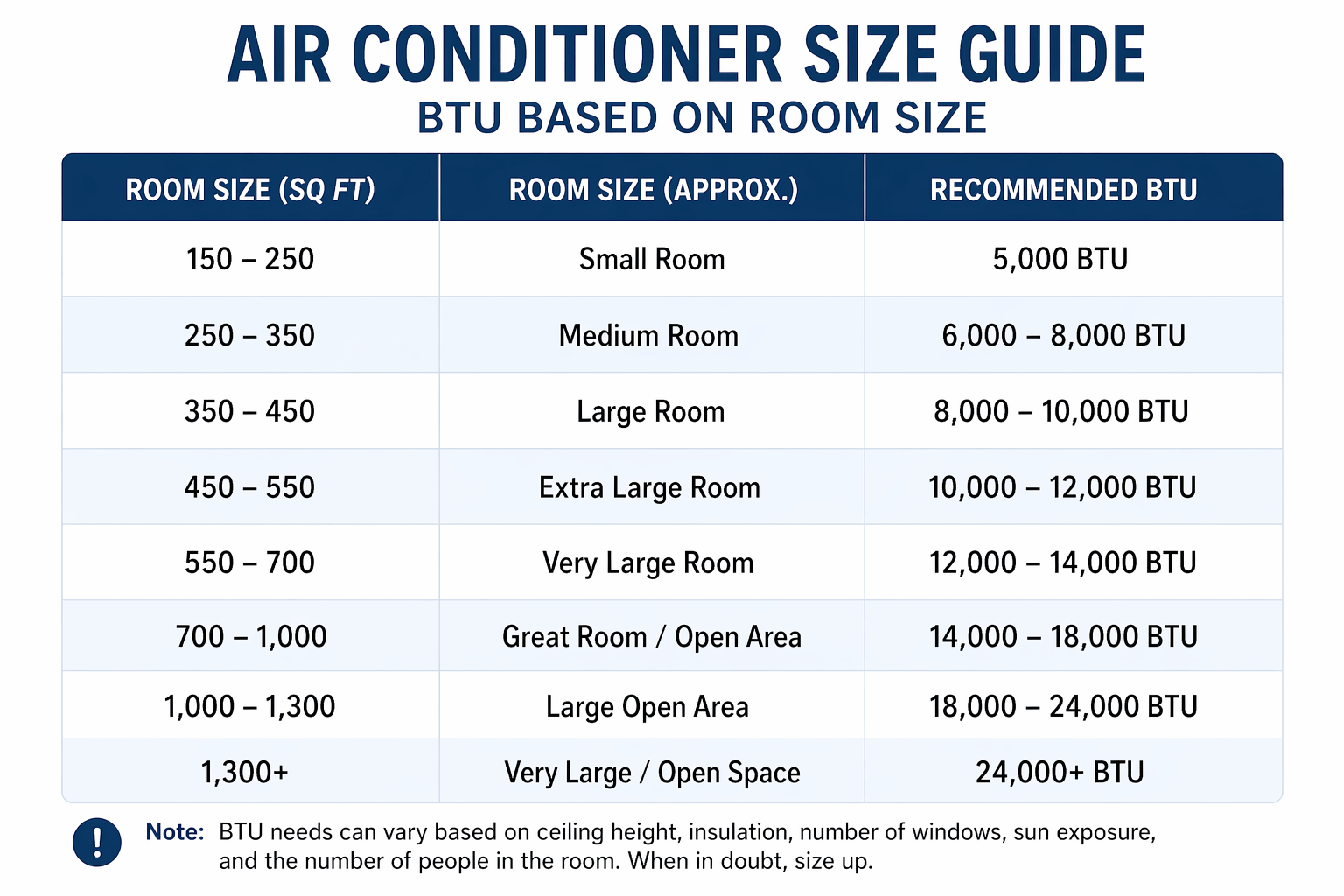
You can also use our efficient BTU calculator for portable AC to help you determine the right sizing requirements.
Power Requirements and Energy Efficiency
Determining your portable air conditioner's electricity usage is an important factor when buying a portable air conditioner. Portable air conditioners generally use 700 to 2500 watts of electricity every hour, putting them into the high usage category. While more energy-efficient portable air conditioners do exist, it is recommended that you calculate how much it will cost you to run a typical portable air conditioning unit before purchasing one.
Small units can use up to 1000W per hour.
Mid-sized units can use up to 1.5kW per hour.
Large units can use up to 2.5kW per hour.
Multiplying your electricity cost per kWh to run the unit by the number of hours you will run it for should give you an idea of what it will cost you to run the unit per day.
Noise Levels
Residential properties and commercial offices have different sound regulations and limits. Due to portable air conditioners being noisier than wall-mounted units, you need to determine whether the device will meet the noise restrictions of the space you will use it in.
Comfortable noise levels are around 65 dB for homes.
While commercial noise limits are around 85 dB.
Unit Portability
To determine if a unit meets your portability needs, ask yourself the following questions:
Does it have wheels?
How much does it weigh?
Do I have enough storage space for when it is not in use?
Ventilation Requirements
It is necessary for the exhaust hose to be placed outside a window to vent out hot air. Because it can be uncomfortable having the window slightly open all the time for the exhaust hose, many portable units come with window kits.
Wind kits contain fabric or plastic window seals with a hole for the exhaust to fit through. This allows hot air to be bented to the outside without letting in cold air.
You also need to consider the length of the exhaust hose, as this will determine:
How portable the unit is.
How far from the window the unit can be placed.
Added Features
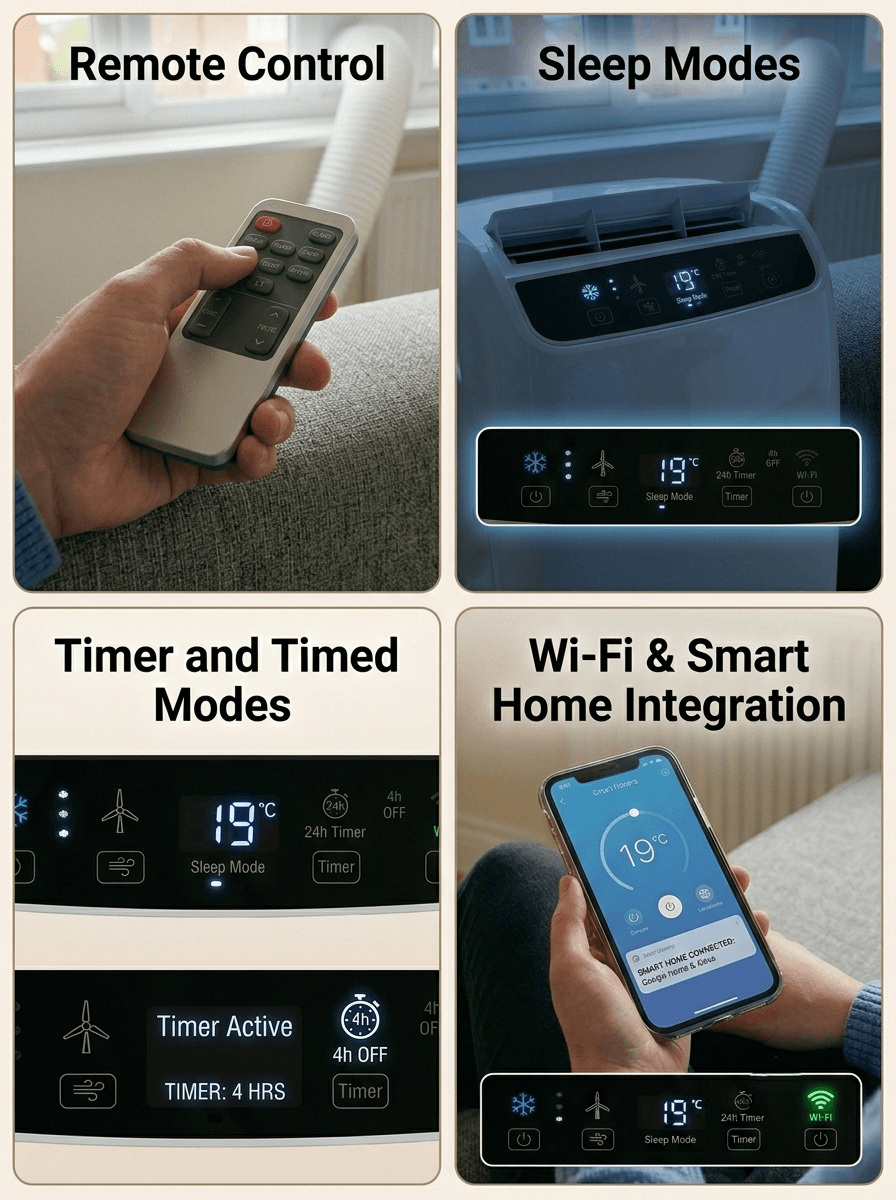
While all portable air conditioners will cool your room, some have added features that increase their functionality and can improve your quality of life. These features include:
Remote Control
Sleep Modes
Timer and Timed Modes
Wi-Fi and Smart Home Integration
Portable Air Conditioner Types Available
Single-Hose Vs Dual-Hose Systems
Single-hose Pros
Costs less upfront
Installation is easy
Provides greater portability
Excellent for cooling small rooms
Single-hose Cons
Uses more Power
Does not cool very quickly
Does not work effectively in large spaces
Costs more to run as a greater runtime is needed to achieve the desired cooling
Dual-hose Pros
Cools more efficiently
Cools much faster than single-hose units
Works more effectively in large areas
Manages intake and exhaust air more efficiently
Dual-hose Cons
Costs more upfront
Units are larger and less portable
Requires more complicated installation
Runs much louder than single-hose units
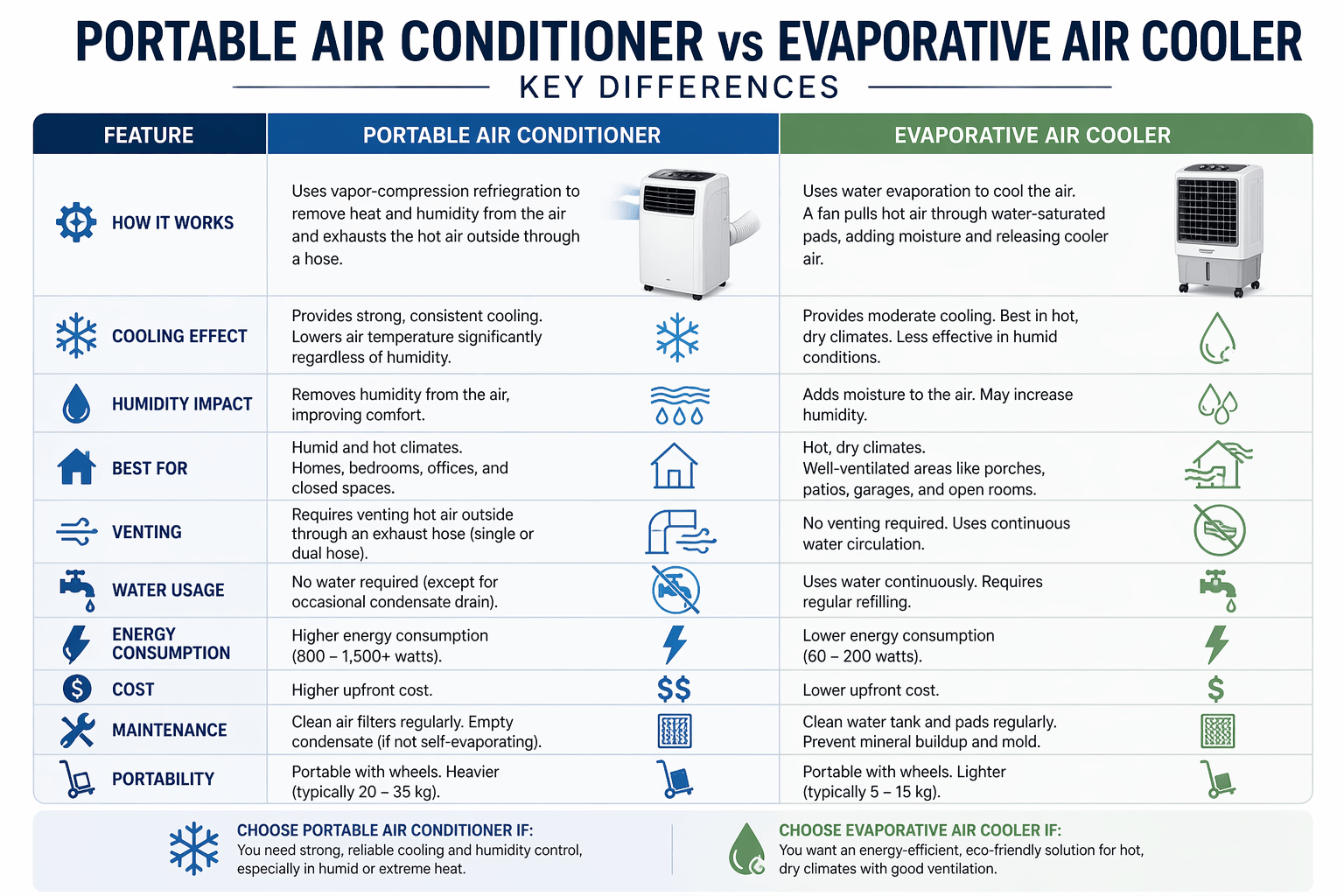
True Portable Air Conditioner Vs Evaporative Air Cooling
Both portable air conditioners and evaporative air coolers are great portable cooling solutions. While both have their merits, there are situations where you would choose one over the other. Some of the key differences are:
How it works: Portable air conditioners cool air using refrigerants and provide cool, dry air. Evaporative cooling units use water to cool air and deliver clean, moisture-rich air.
Climates they work in: Portable air conditioners are generally effective in all climates, provided the space it is cooling is not too large. Evaporative coolers will only work effectively in hot and dry conditions where relative humidity is low.
Cost to install: Portable air conditioners typically require more money upfront for installation, whereas evaporative coolers are generally plug-and-play.
Choose a portable air conditioner if:
The room you are cooling is relatively small.
In climates where the humidity is high.
Doors and windows cannot be opened.
You need to cool your home, office, or a small space.
Choose an evaporative air cooler if:
The area you need to cool is well-ventilated
The climate is hot and dry.
Power consumption is limited.
Best for well-ventilated areas like porches and open rooms.
What are the Best Portable Air Conditioners for Your Space?
Small Apartment
For small and flats, you need to balance energy efficiency with cooling capacity. We recommend units with a higher BTU, around 9000 to 12000, and strong airflow to ensure you achieve maximum cooling.
Bedrooms
Bedrooms require portable air conditioning units that has a moderate BTU output, around 7000 to 10000, and include features like sleep mode and cooling timers.
Offices
Portable air conditioners for offices are all about portability and functionality. Look for a unit with moderate cooling output, once again around 7000 BTU. Units that offer lower power consumption and smart features like Wi-Fi integration are great for office environments
Rental Properties
Look for a unit that does not require permanent installation and comes with a removable window kit.
Choosing the Right Portable Air Conditioner
With all the information we have provided, you are probably asking yourself, “How do I choose the right portable air conditioner?” To ensure you get it right, we have compiled a few expert tips as well as a buying guide checklist to help you when shopping our range of portable air conditioners.
Tips for Choosing the Right Unit
Ensure the air output (BTU) is enough for the room you are cooling. Use our efficient cooling calculator to make sure you get this right.
Consider your power needs and buy a unit that is energy efficient.
Do not buy cheap, low-quality air conditioners that will cost you more in the long run.
Ensure you buy the right device for the climate you are in.
Use the table below to help you purchase the best portable air conditioner:
Unit Features | Yes / No | |
|---|---|---|
BTU Output | Does the BTU match your room size? | |
Power Usage | Is the unit energy efficient? | |
Noise Level | Does the noise level of the air conditioner meet the requirements of your space? | |
Space Requirements | Is there enough floor space for the unit? | |
Installation | Does the unit include a window kit? | |
Warranty | How long is the manufacturer's warranty? |
Final Advice for Buying a Portable Air Conditioner
Firstly, you want to ask yourself whether you need a traditional wall-mounted unit or whether a portable unit will suit your needs. Thereafter, it is important to choose the correct portable unit to ensure maximum cooling results.
Once you have determined your cooling requirements, head over to our portable air conditioner section and compare the top models we have available. This will allow you to make a confident purchasing decision and ensure that you get the cheapest portable air conditioner options.
For more information about cooling and HVAC systems, contact us to speak to one of our specialists. If you're looking for alternative cooling options, head to our cooling section, where you will find additional cooling products like cooling fans and packaged terminal air conditioners.
Frequently Asked Questions About Portable Air Conditioners
What is the best portable air conditioner for home use?
It depends on the size of the space you are cooling, your electricity budget, feature requirements, and noise levels.
How much power do portable air conditioners use?
Typically, portable air conditioners will use between 900W and 2000W, depending on size and air output.
Can I run my portable air conditioner all night?
Yes, a portable air conditioner can be run for long periods of time, such as overnight.
Are portable air conditioners and evaporative air coolers the same?
No. Portable air conditioners and evaporative coolers use different cooling methods to provide cooling.