


Packaged Terminal Air Conditioners: The Perfect Cooling Solution for Small Spaces
Date: 22 May 2025

In the ever-growing landscape of small-city apartments and compact homes, efficient, space-saving cooling systems are becoming increasingly important. Large window air conditioners with exterior condenser units take up too much space and do not meet energy efficiency requirements for small spaces. This has created a large gap in the small room cooling solutions market. A gap that Packaged Terminal Air Conditioners are filling.
Packaged terminal air conditioners are being hailed as the perfect HVAC systems for small spaces thanks to their compact size and energy efficiency. PTACs (packaged terminal air conditioners) are small, single-unit air conditioning units that are installed in small spaces like bedrooms, hotel rooms, and small offices. Unlike traditional window units, PTAC units have all the major components housed in a single cabinet. This means that the evaporator coil, condenser, and compressor are all stored in one casing. The result of this single-unit design is to save space and provide more efficient cooling.
One thing that sets PTACs apart from portable air conditioners is that PTACs can provide both heating and cooling. By having dual functionality, PTAC units are slowly building a reputation for being the best AC for small rooms. Throughout this article, we will explore the advantages of PTACs, such as space-saving, cost-effectiveness, and energy efficiency. Explore whether a PTAC unit is the right cooling solution for your space as you learn more about compact air conditioning systems for small spaces.
What are Packed Terminal Air Conditioners?
How Do PTAC Units Work?
PTAC units operate in the same way as traditional wall-mounted or portable air conditioners. It uses a refrigerant gas to cool the air. It does this by drawing in the hot air from the room, passing it through a refrigeration cycle, and then transferring the hot air to the outside. PTAC units can also use an electric heat pump inside the unit to heat the room. What makes PTAC units unique is that the entire process takes place in one unit.
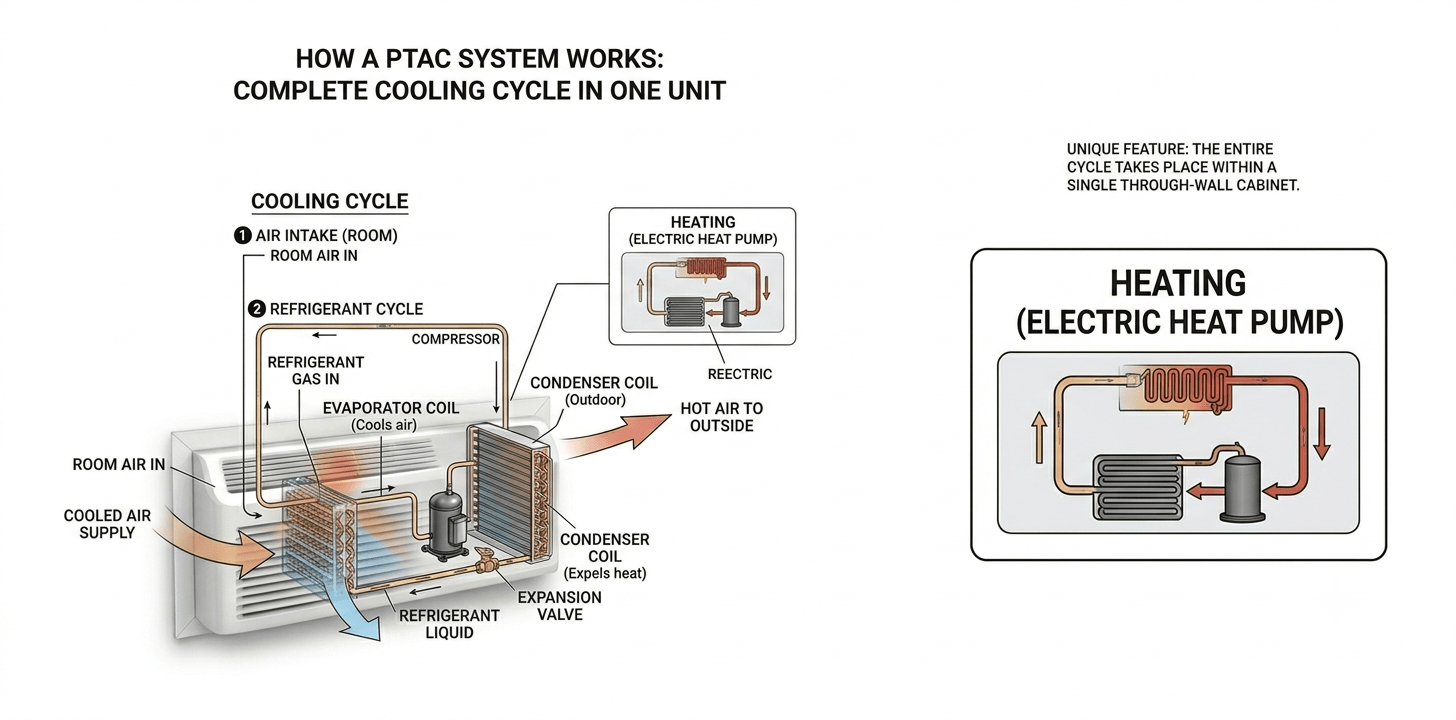
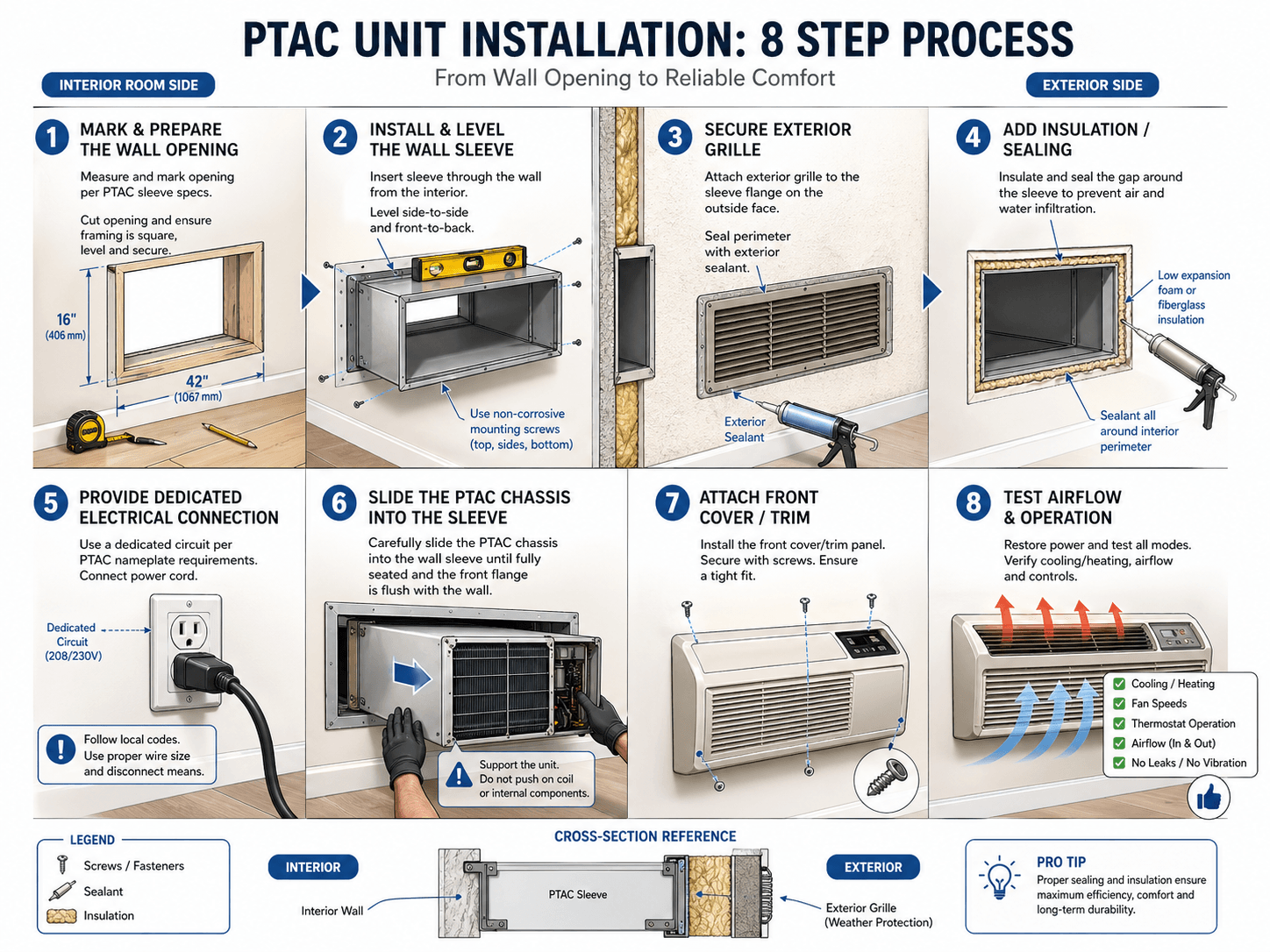
By including all the major components, PTAC units can be more compact than window AC units. The all-in-one design also means that PTAC unit installation is much simpler and easier to perform. Like window units, PTAC units must also be installed through the wall, but the compact nature means only a single unit must be installed. The installation of a PTAC unit looks as follows:
A wall opening is made: a section of the wall is cut out to fit the unit.
A wall sleeve is installed: A metal wall sleeve is then placed in the opening to house the unit.
External Grill Installation: A louvred grill is installed on the outside to assist with airflow.
Add insulation and sealing as necessary: To ensure that no drafts or moisture seeps in around the unit.
Connect the PTAC unit to a power supply: The unit must be connected to a power source with a dedicated breaker.
Set up drainage: A drain kit must be installed for excess water and moisture to safely drain away.
Insert PTAC unit: The PTAC unit can then be positioned in the installed wall sleeve and secured with mounting screws.
Ensure the unit is working effectively: Once the unit is connected, start it up to ensure it is cooling and heating effectively. Also, test for air leaks, noise levels, and ensure proper drainage is occurring.
Where Are PTAC Units Commonly Used?
PTAC units are best suited for smaller spaces where cooling is needed, but a window unit cannot be installed.
Spaces where PTACS are most used include:
Hotel and Motel rooms
Small apartments
Student accommodation
Offices
What Makes PTAC Units Perfect for Small Spaces?
Space-Saving Design
PTAC units can be installed directly into the wall, meaning that no ductwork is required. It also does not need to be installed close to a window, as all the components are contained in a single unit, meaning that it can be installed anywhere with access to an outside wall.
PTAC units also free up floor space as the internal section of the unit is installed into the side of a wall. This makes it easy to clean around and under the unit and also saves space in smaller rooms.
Cost-Effective Cooling
Traditional AC units can have high upfront costs and high running costs. Fortunately, PTAC units are cheaper to install because they do not require any ductwork. Unit costs are also much lower than traditional AC units, thanks to the all-in-one design. Finally, PTAC units have a lower running cost due to energy-efficient technology, heat pump efficiency, and individual zone control.
Energy Efficiency
An important feature of PTAC units is individual room climate control. Simply put, PTACs only cool or heat single rooms. Not having to cool an entire building means PTAC units can run more efficiently, which leads to reduced electricity consumption and maintenance costs.
Quick and Easy Installation & Maintenance
As previously mentioned, PTACs are extremely simple to install. It requires the installation of just a single self-contained unit, which means only one wall hole must be made. Most PTAC units on the market are install and plug-and-play devices.
Maintenance is also very straightforward. PTAC units are designed in such a way that filters and parts can be accessed very easily. The modular nature of PTAC units also makes it easy to swap out non-working parts.
Choosing the Right PTAC Unit for Your Space
There are many PTAC units on the market, and here at NationalHeaterShop we stock a comprehensive range of designs. Use our handy buying guide below to help you make the right decision when choosing a PTAC unit for your space.
PTAC Cooling Capacity
An important factor to consider when choosing a PTAC unit is that device’s cooling capacity (measured in BTUs). Each unit has a particular BTU rating, which corresponds to an area it can cool. The higher the BTU rating, the larger the area it can cool. Below is a simple chart to help you select the right PTAC unit based on the BTU rating and the area it can cool.
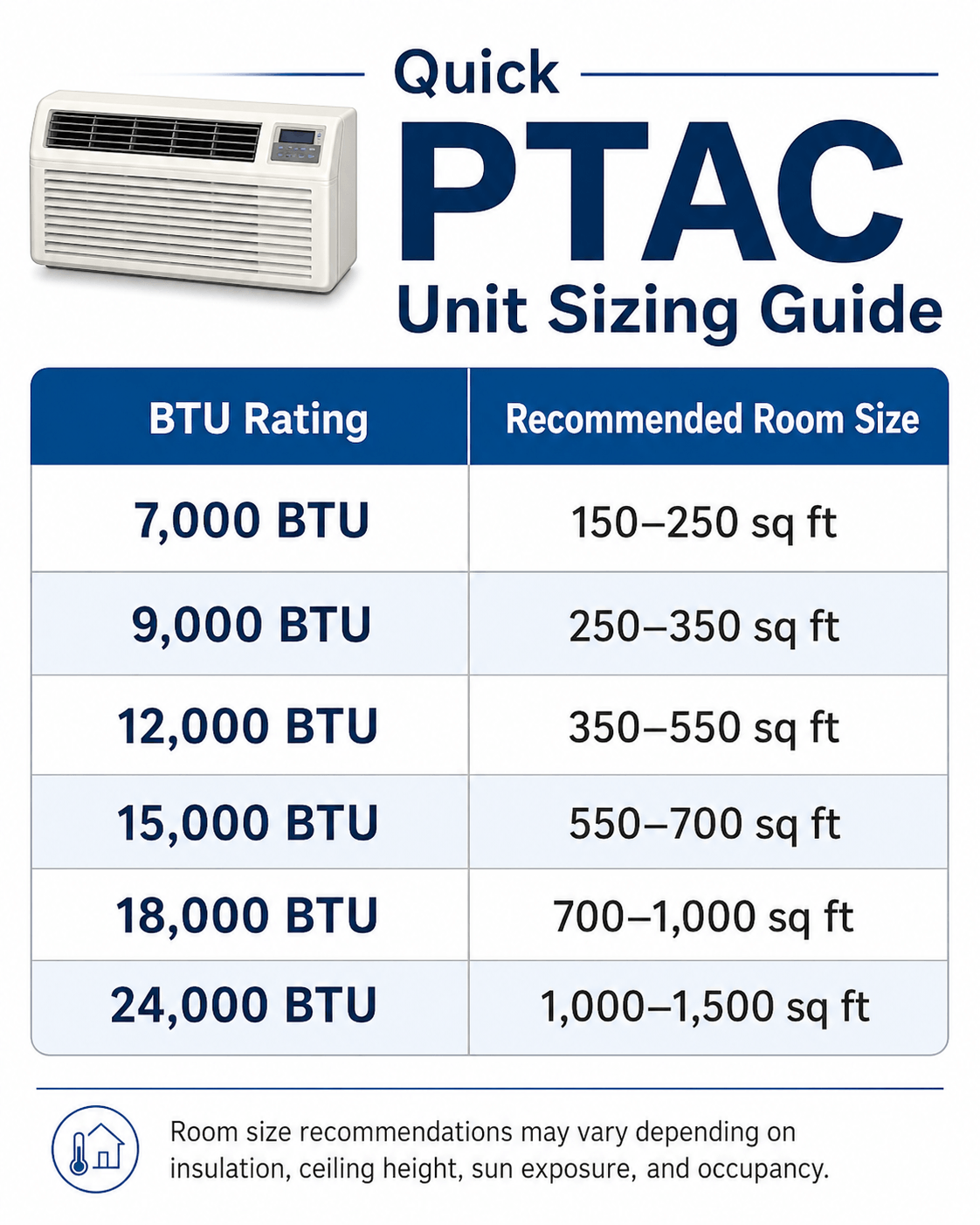
You can also use our efficient cooling BTU calculator to determine what your needs are. Simply add the size of your space and heat source information, and the calculator will tell you what BTU output you need.
PTAC Energy Efficiency
When purchasing a PTAC unit, you want to ensure that it will meet your energy efficiency requirements. There are two main measurements to consider when evaluating energy efficiency:
EER (Energy Efficiency Ratio): The EER is a measurement of the cooling output divided by the power output. This measurement gives you an overview of the unit’s energy consumption at peak cooling performance only. While this is a good measurement to have, it does not give you the full picture of how energy efficient the unit is.
CEER (Combined Energy Efficiency Ratio): CEER has become the new energy efficiency measurement standard. A CEER rating considers the energy used for peak cooling performance, energy used by the fan, and the energy usage during standby modes. As such, CEER gives you a more realistic idea of how energy efficient the entire unit is.
When purchasing a PTAC unit, we recommend that you look at the CEER rating, as it has become the gold standard of energy efficiency measurements. A good rating would be in the range of 9.0 to 12.0+. This indicates a unit that is very energy efficient.
Noise Levels
Smaller spaces like bedrooms and offices have much lower tolerances for noise. As such, it is important to choose temperature control solutions that keep the noise to a minimum. It is recommended that residential bedrooms maintain a noise level of 25-30dB(A) to ensure comfortable sleep. Office noise levels are recommended to be 35-55db(A) to maintain optimal productivity. When selecting your PTAC unit, ensure that the noise level of the unit falls in the acceptable range for your intended space.
Modern PTAC units also feature a low-decibel feature that can be used to suppress the noise level even more. Look out for this feature if noise level is a key consideration.
Heating Functionality
PTAC units don’t just cool, they heat as well. The ability to cool and heat a space with one compact unit is what makes PTAC units a preferred climate control solution for small spaces. But not all PTAC units use the same technology for heating. In the world of packed terminal air conditioners, 2 heating methods are used:
Heat Pumps: PTAC units with heat pumps use the refrigeration cycle to move heat around instead of heating the air directly.
Electric Resistance Heating: PTAC units with this kind of heating system use the refrigeration cycle for cooling and an electric heating element for heating.
Smart Controls and Thermostats
Modern PTAC systems come with a host of advanced technological features that make them more convenient to use. Some of these features include:
Wi-Fi connectivity: This allows you to connect your device to the local Wi-Fi network and control it remotely using a smartphone.
Programmable temperature: The temperature on modern units can be set to a variety of temperatures, ranging from hot to cold.
PTAC Unit Cost
When selecting a PTAC unit, you need to consider your budget constraints. While PTAC units are more cost-effective than traditional air conditioning, there are still a host of costs you need to consider. These include:
Purchase price of the PTAC unit.
Installation cost.
Running costs, which include your energy bill and maintenance fees.
Packed Terminal Air Conditioning Compared to Other Cooling Systems
PTAC vs Mini Split Systems
Cost: PTAC units have lower upfront costs due to simple single-unit installation. Mini Split Systems require a more intensive installation process, which is more expensive.
Installation: PTAC has a simple single-unit installation that requires a single wall hole to be made. Mini Split Systems require the installation of both an indoor and outdoor unit, meaning the installation is more complex.
Efficiency: PTAC offers single-room cooling, which is more energy efficient. Mini Split Systems provide multi-zone cooling, which makes the system a more effective cooling unit.
PTAC vs Window Air Conditioners
Cost: Window air conditioners have a lower upfront installation cost but are more expensive to run in the long run.
Installation: Professional installation required for PTAC unit. A window air conditioner does not need professional installation and can be slid into a window.
Efficiency: Window air conditioners are less efficient than PTAC units, and most window units do not have heating functionality.
PTAC vs Portable Air Conditioners
Cost: PTAC units require more upfront costs than a portable air conditioner.
Installation: PTAC units require a permanent installation, whereas portable air conditioners are plug-and-play out of the box.
Efficiency: PTAC units are more efficient and quieter than portable air conditioner units.
Installation and Maintenance Advice
Professional or DIY installation
It is highly recommended that you have your PTAC unit professionally installed. PTAC units might not require complicated ductwork, but it still requires a hole in the wall for mounting. Professional HVAC technicians are certified and trained to safely break through your wall to expertly install your PTAC unit.
Routine Maintenance
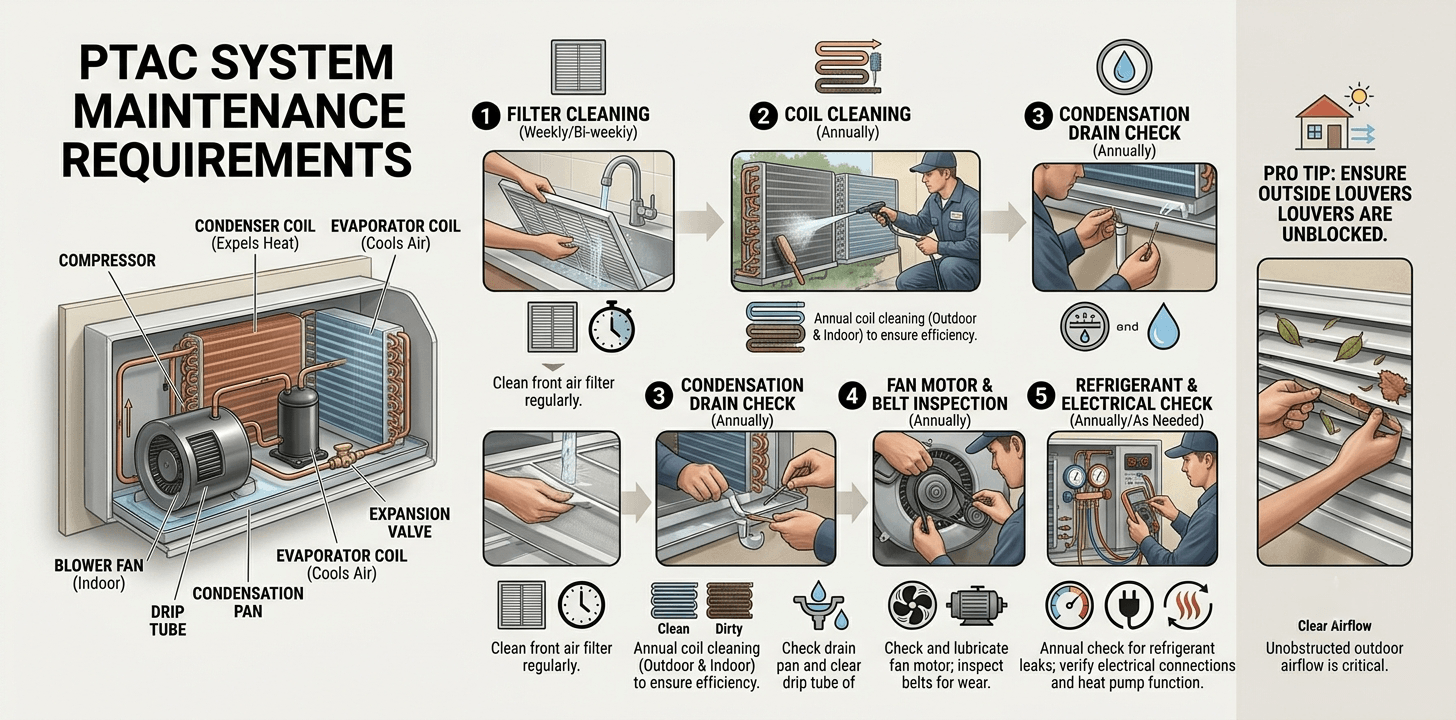
To ensure the long-term effectiveness of your PTAC unit, follow this simple 3-step maintenance plan:
Clean the air filters regularly: A quarterly cleaning of the air filters will ensure that your unit maintains optimal airflow.
Inspect coils: Check your unit’s coils regularly to ensure they do not need to be replaced.
Check airflow: To ensure optimal performance, check the airflow regularly.
Are Packed Terminal Air Conditioners Worth Buying for Small Spaces?
Beyond the compact size, PTAC units offer a variety of benefits for small spaces. They are affordable, provide energy-efficient cooling, are easy to install, and have both cooling and heating functions. On top of that, PTAC systems have low noise modes, which are perfect for small spaces.
In short, packed terminal air conditioners offer a strong value proposition if you need to cool single-zone areas and prefer a cooling solution that is not as noisy as portable air conditioners.
If budget is a major concern, PTAC units might not be the way to go. Instead, for budget-conscious buyers, we would recommend window air conditioners or portable AC units. These offer highly efficient cooling with lower upfront costs.
But if you are in the market for a PTAC unit, we recommend you head over to our PTAC section and compare the top-rated units. We include convenient comparison charts to help you find the best solution for your space.
Frequently Asked Questions About Packed Terminal Air Conditioners
Do PTAC units use a lot of electricity?
It depends on the BTU rating of the device. PTAC units with a higher BTU rating require more energy, but overall, PTAC systems are more energy efficient than traditional air conditioning.
Is it possible to install a PTAC unit myself?
While it is possible, it is not recommended. PTAC units require significant modification to your property. It is therefore recommended that you contact a professional to install your PTAC system.
Are PTAC units appropriate for homes?
Yes. PTAC units are perfect for small homes and rooms.
What is the difference between packed terminal air conditioners and window air conditioners?
PTACs are installed through the wall instead of through a window.