


The Best Cooling Solutions to Keep Your Bedroom Cool at Night
Date: 23 May 2022
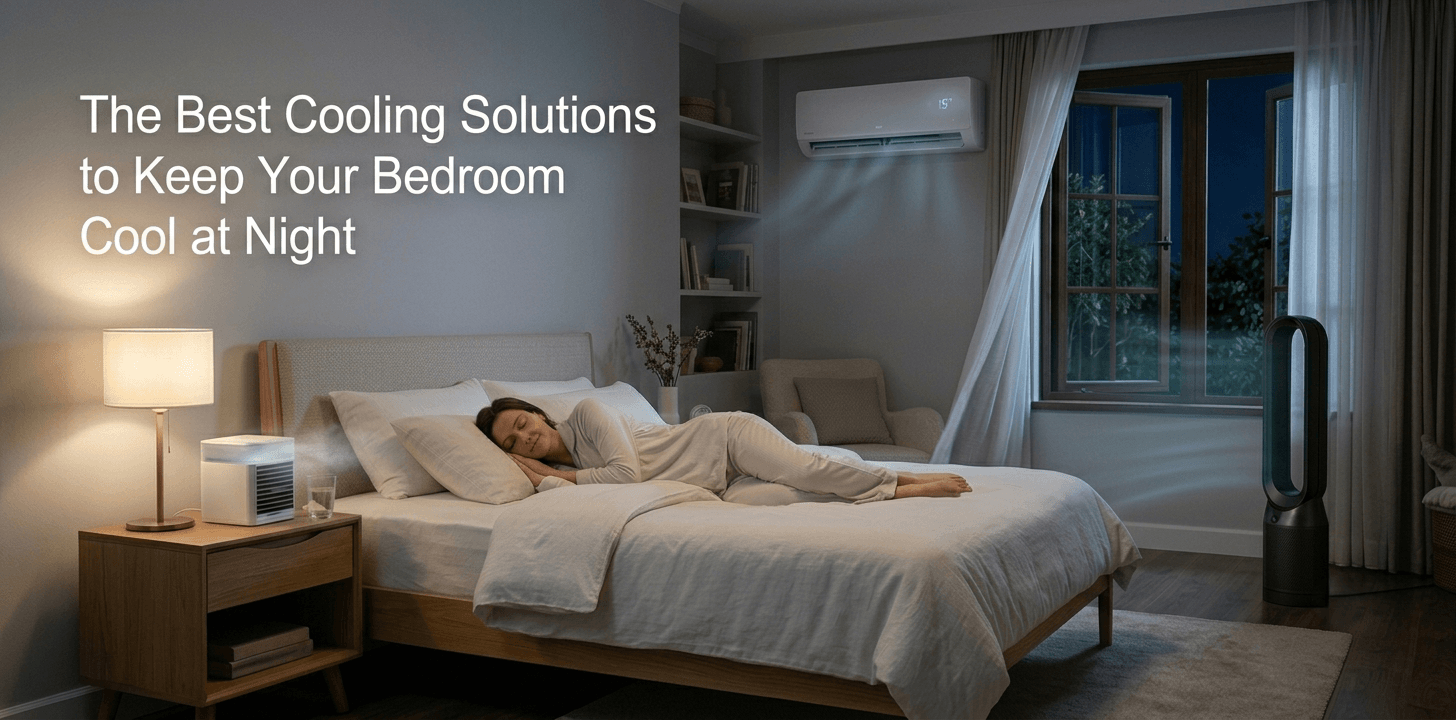
Nighttime cooling can be tricky. It relies on balancing cooling your room naturally with finding the perfect cooling product. Cooling products must be suited for nighttime cooling. These products must work efficiently and silently, and have features suited for use through the night.
Natural cooling methods are a great way to start, but must be supplemented with a cooling appliance in extreme heat. Natural cooling methods include ventilation, heat-blocking window covers, and breathable bedding. Cooling appliances that are great options for nighttime cooling include cooling fans, air conditioners, and evaporative air coolers.
There are a few things to consider when picking a nighttime cooling appliance. An effective nighttime cooling appliance must combine effective temperature reduction with comfort features like reduced noise. This combination of features results in peaceful and comfortable sleep.
Why Nighttime Cooling Matters for Better Sleep Quality
One of the most important factors that leads to a good night’s sleep is comfort. Creating a comfortable sleeping environment requires the right temperature and quiet atmosphere. The perfect bedroom temperature, according to sleep experts, is around 16 to 18°C. Temperatures above this range can result in discomfort, sweating, and poor sleep quality.
For good-quality sleep, you want a well-ventilated bedroom. You should consider a cooling system or appliance if your room is poorly ventilated or prone to heat spikes. A nighttime cooling system becomes even more important if you:
Sleep in an upstairs room.
Live in a hot or humid climate.
Share a bed with another person.
Use thick bedding.
Ultimately, you do not want to make your bedroom too cold, as this will also create discomfort. Rather, you want to create a stable, comfortable environment that promotes good sleep.
Best Nighttime Cooling Solutions at a Glance
Cooling Solution | Best Use Case | Main Benefit |
|---|---|---|
Cross ventilation | Works best on cooler evenings. | Circulates cool outside air around your bedroom. |
Fans | Great when you need a quick and affordable cooling option. | Provides constant airflow over your body. |
Blackout curtains | Works best in bedrooms that receive direct sunlight during the day. | Prevents heat buildup during the day. |
Portable air conditioners | Hot bedrooms with poor ventilation and high humidity. | Reduces the bedroom temperature and provides accurate temperature control. |
Evaporative coolers | Hot and dry bedrooms with good ventilation. | Reduces the bedroom temperature and power use. |
Dehumidifiers | Hot and humid bedrooms. | Reduces humidity, making the bedroom feel less sticky and heavy. |
Ways to Improve Bedroom Ventilation
Improving ventilation is a great natural and cost-effective way to cool your bedroom. Improved ventilation will cause hot air trapped in your bedroom to exit through a door or a window.
Cross Ventilation
Implementing cross-ventilation is one of the easiest ways to improve bedroom ventilation. Cross ventilation requires the opening of multiple doors or windows on opposite sides of a room or home. These multiple openings cause hot air to be pushed out by incoming cool air.
Using cross-ventilation to cool a bedroom is easy. Open your bedroom door and windows on opposite sides of your home for a while. Alternatively, you can simply open your bedroom windows and door.
Cross-ventilation works best later in the day when temperatures start to drop. Hot and humid indoor air is replaced by cooler, evening air.
Block Out Heat During the Day
Bedrooms absorb heat during the day, especially on very sunny days. This can happen due to direct sunlight entering the room and heating up the furniture in the room. Alternatively, leaving bedrooms open during the day in hot and humid climates will cause the bedroom to fill with hot air.
The best way to prevent this from happening is by keeping windows and curtains closed during the day, especially during peak heat hours. In addition to doing this, blackout blinds or curtains are recommended if your room receives a lot of direct sunlight.
Keeping windows shut all day can result in stuffy rooms. A way to combat this is to open windows later in the evening, when the outdoor air has cooled down. At that time, cross ventilation is highly recommended to cool your bedroom.
Cooling Fans
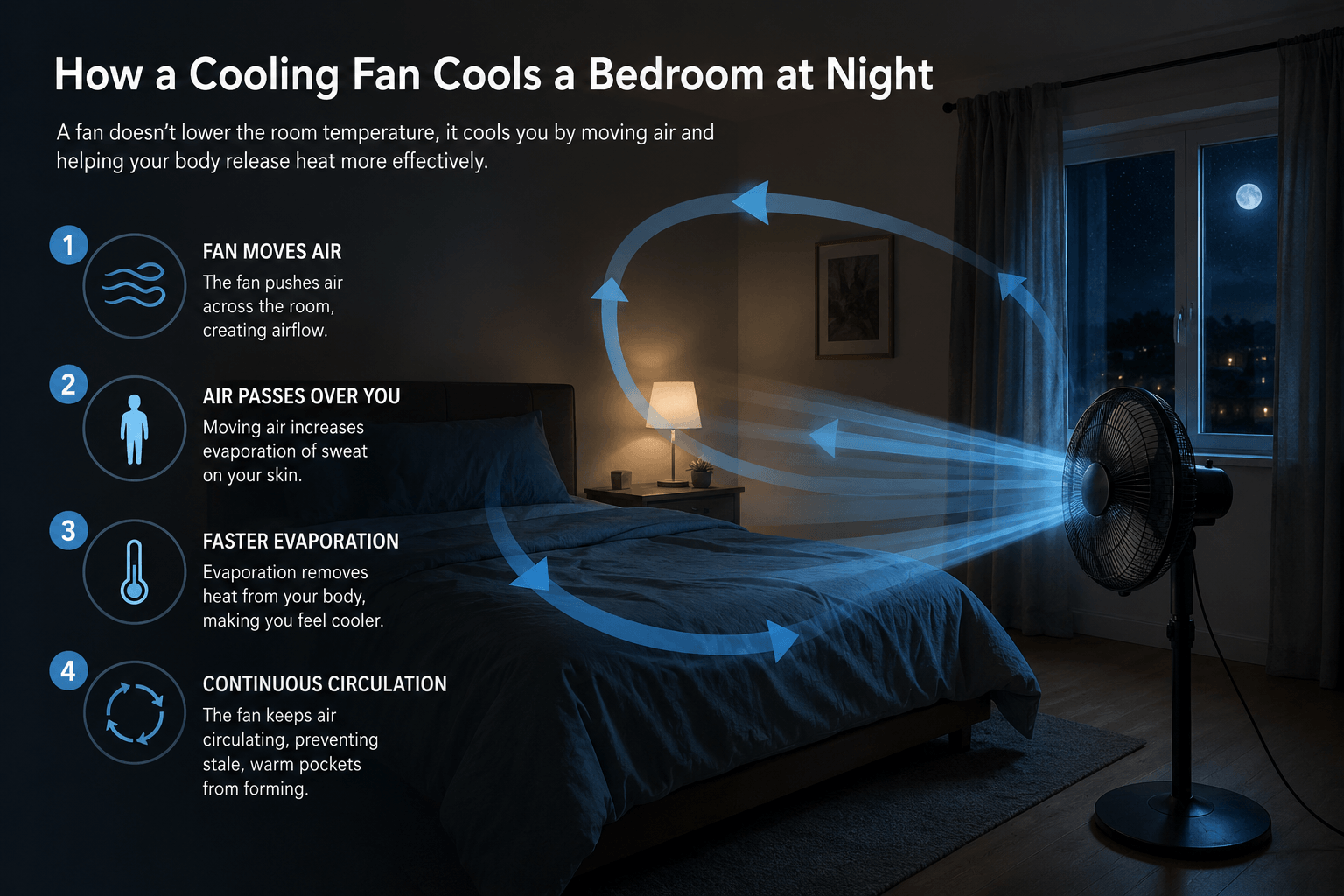
A cooling fan is one of the most affordable and convenient cooling solutions on the market. They can be bought relatively cheaply and used immediately out of the box. Cooling fans are great for increasing airflow in your bedroom, and they work very well when used in conjunction with cross-ventilation. It is important to note that cooling fans circulate air around the room, and do not actually reduce the room temperature.
You can also use the cooling effect of evaporation in combination with your cooling fan. Running a cold, wet cloth over your skin will increase the cooling effect of the fan. When the fan blows warm air over your wet skin, the warm air causes the moisture on your skin to evaporate, resulting in cooling.
Positioning a Cooling Fan in Your Bedroom
The fan should not be placed randomly. Instead, it should be placed in a location where the fan can move air to where it is needed the most.
Effective cooling fan placement tips:
Placing the cooling fan by an open window will improve airflow and allow the fan to move cool outside air into the room.
Position the fan to face your bed, but do not aim it directly at your face.
Allow your fan to oscillate. This will allow the airflow to spread around the room.
Ceiling fans are also great options for nighttime cooling. Remember to set your ceiling fan to a counterclockwise rotation in summer. Changing the rotation will create a cool breeze that is pushed downward.
Cooling Fan Types for Bedrooms and Nighttime Cooling
Tower fans are great for small bedrooms.
Pedestal fans provide strong airflow with adjustable height.
Desk fans are great for providing personal cooling.
Ceiling fans provide consistent airflow for the entire room.
Window fans are effective at pulling in cooler outside air.
Blocking Out Heat During the Day
It is important to prevent your bedroom from receiving direct sunlight during the day. Direct sunlight can heat furniture and bedding, causing heat to build up and become trapped in your bedroom. Using blackout blinds or curtains is an effective way to keep direct sunlight out of your room during the day.
Portable Air Conditioners
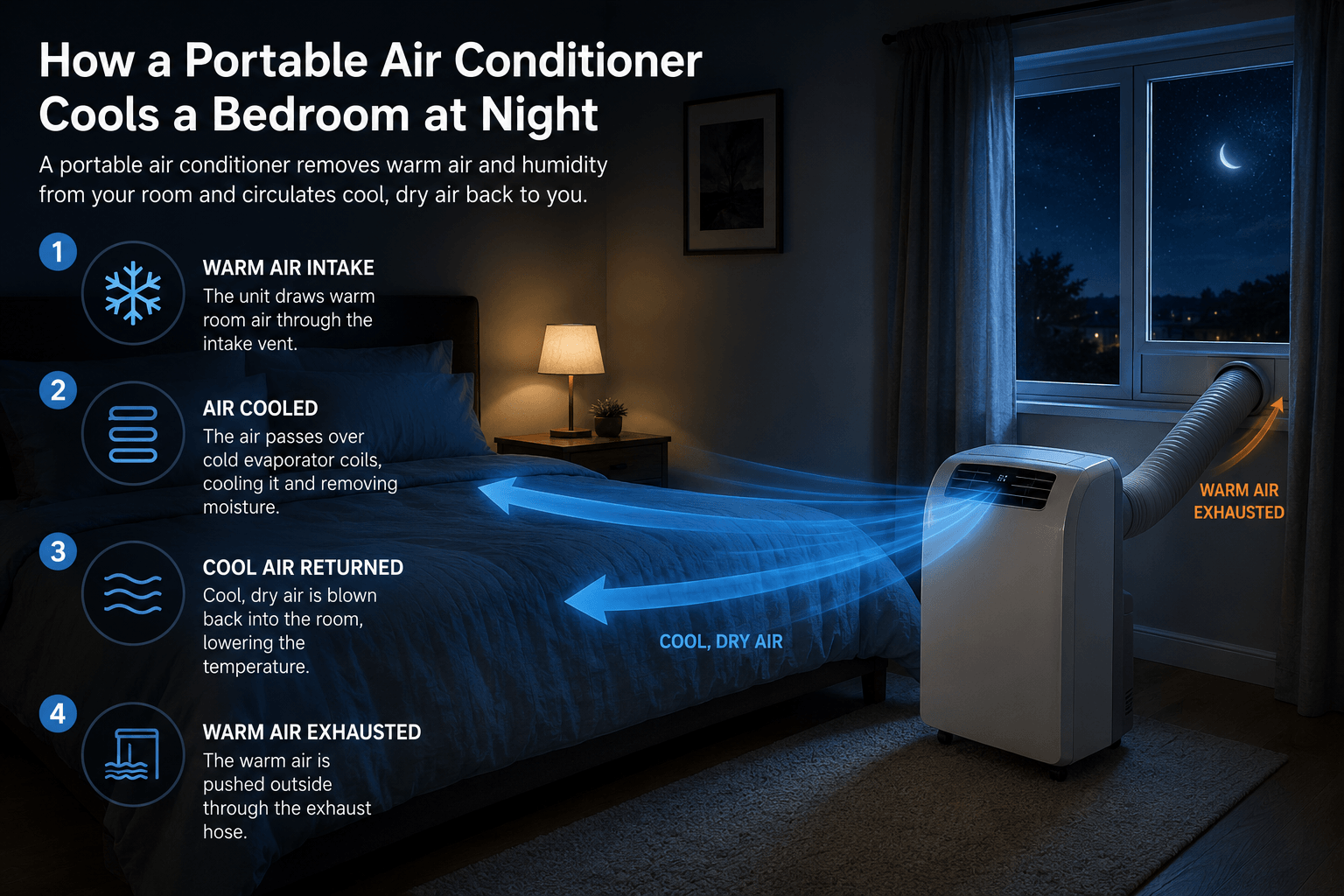
A portable air conditioner may be a great option for extremely hot bedrooms, heatwaves, and bedrooms with poor ventilation. Portable air conditioners use refrigeration technology to reduce the temperature and humidity in your bedroom. They also provide accurate temperature control, allowing you to find the perfect temperature for maximum sleep comfort.
Best Use Cases for a Portable Air Conditioner
A portable air conditioner is a great option for you if:
Your bedroom is extremely hot and humid.
You are renting and cannot install a wall-mounted air conditioning system.
You need accurate temperature control.
Your bedroom has poor ventilation.
Portability is what makes these air conditioners especially useful for bedrooms. The portable AC unit can be moved from room to room and used where it is needed.
Choosing the Best Portable Air Conditioner for Nighttime Cooling
There are many factors that should be considered when choosing a portable air conditioner to cool your bedroom at night. These include:
Ensuring the portable AC unit has the correct cooling output (BTU) for the size of your bedroom.
Portable AC units used in bedrooms must have a low noise mode.
Accessibility features like sleep mode, timer function and remote control make portable AC units easier to use in a bedroom.
Ensure the unit has an energy efficiency mode.
Make sure the window venting kit supplied matches your window type.
Look for portable air conditioners with dehumidifier modes to reduce bedroom humidity levels.
Pros and Cons of Portable Air Conditioners at Night
Pros:
Reduces bedroom temperature and provides accurate temperature control.
Can be used in hot and humid bedrooms.
Provides effective cooling during heatwaves.
No permanent installation makes it a great cooling option for renters.
Cons:
Portable air conditioning units are noisy due to the compressor being in the room.
Consumes large amounts of electricity.
Takes up floor space.
Requires window venting.
Evaporative Air Coolers
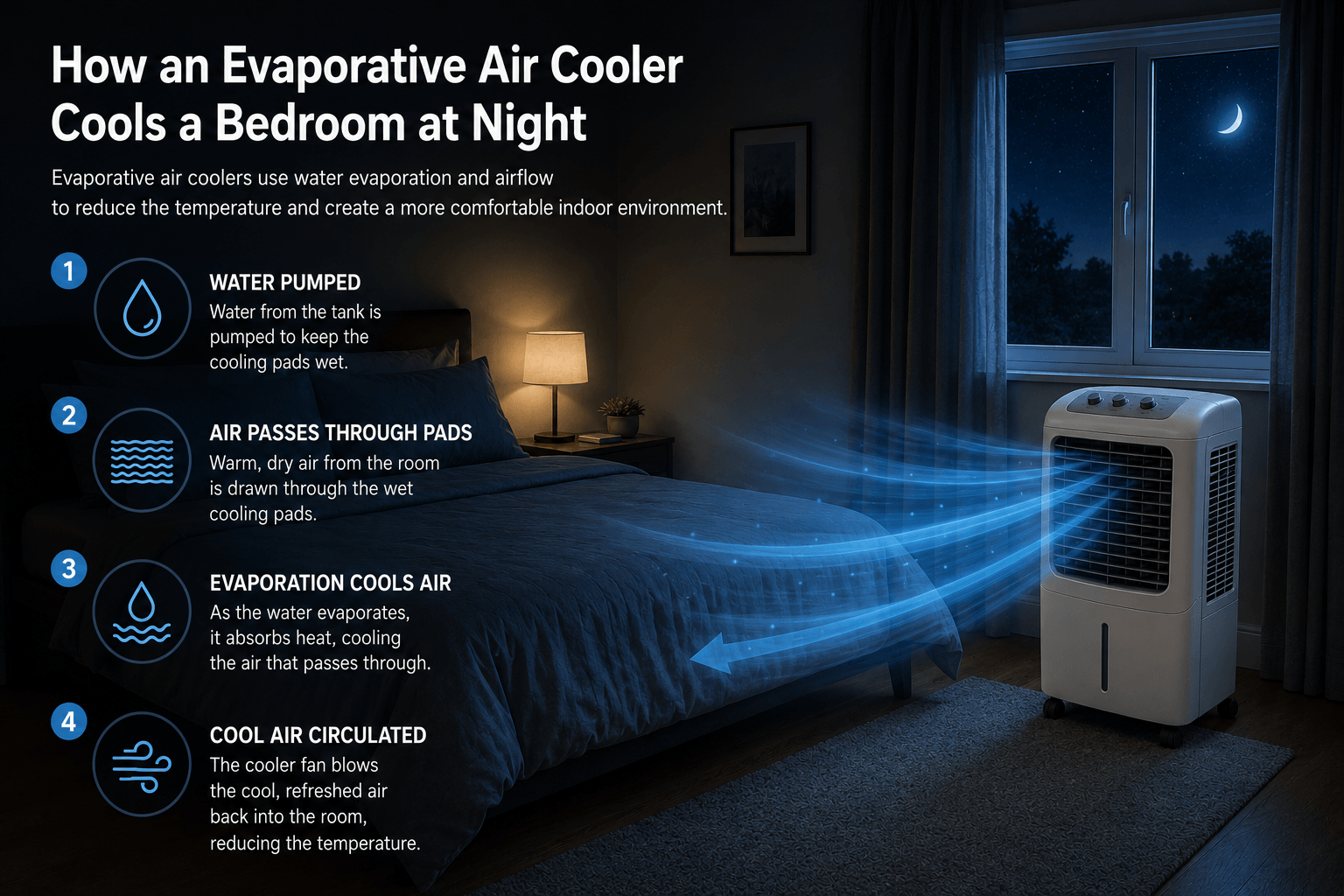
Evaporative air coolers are portable electrical cooling appliances that utilise the cooling effect of evaporation to reduce the temperature of a room. In an evaporative air cooler, heat is passed through cooling pads that are drenched with water. As the heat interacts with the cooling pads, evaporation takes place. The evaporation cools the air and fills it with moisture. Once this process completes, the cool and humid air is blown back into the room.
Because evaporative air coolers add moisture to the air, they operate optimally in dry, well-ventilated rooms.
Best Use Cases for an Evaporative Air Cooler
An evaporative air cooler is a great option for you if you:
Need to cool a hot bedroom in a dry environment.
Have a room with good ventilation and airflow.
Need an energy-saving cooling system.
Need cooling in mild to moderate nighttime heat.
When Evaporative Air Coolers Are Not Ideal
We recommend against using an evaporative air cooler in:
Bedrooms with high levels of humidity.
Bedrooms with poor ventilation.
Damp environments.
The Importance of Controlling Humidity in Bedrooms
Reducing the humidity levels in your bedroom is as important as reducing the actual temperature. A bedroom with high levels of humidity can still feel uncomfortable, even if the temperature has been reduced. This is because high levels of humidity affect your body’s ability to cool itself via sweat.
In addition to cooling your room, you need to ensure that your bedroom’s humidity levels are comfortable as well.
Signs That Your Bedroom is Too Humid?
These are signs that the humidity levels in your bedroom are too high:
The air feels heavy and sticky.
Your bedding feels damp constantly.
Condensation builds up on the walls and windows.
The room smells musty.
Mould grows around windows or on walls.
We recommend using an air conditioning system like a portable air conditioner or packed terminal air conditioner if the humidity levels in your bedroom are high. Air conditioning systems can help dry the air by removing moisture from the air it draws in.
Reducing Indoor Heat Sources Before Bedtime
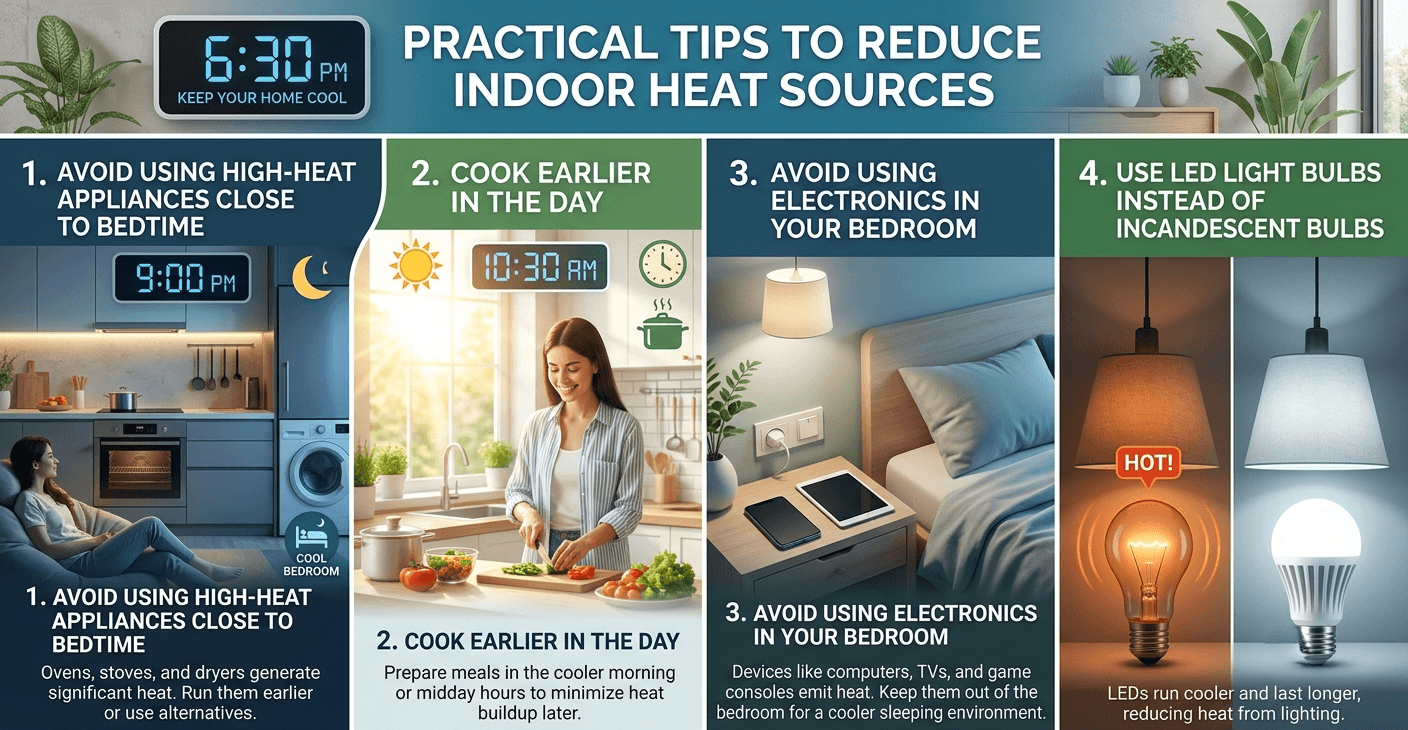
In addition to the nighttime cooling tips we have mentioned so far, we also highly recommend reducing indoor heat sources before bedtime. Examples of indoor heat sources include:
Ovens and stoves.
Tumble dryers.
Dishwashers.
Computers and laptops.
Large TVs.
Incandescent light bulbs.
Charges and miscellaneous electronics.
Some practical tips you can follow to reduce indoor heat sources include:
Avoid using high-heat appliances close to bedtime.
Cook earlier in the day.
Avoid using electronics in your bedroom.
Use LED light bulbs instead of incandescent bulbs.
Creating a Nighttime Cooling Routine
One of the biggest concerns with cooling appliances is energy use. With the cost of living rising year after year, using a portable air conditioner or an evaporative air cooler all night is not very cost-effective. Developing a consistent cooling routine can help keep your bedroom cool and comfortable while also keeping the costs down.
A practical piece of advice is to pre-cool your bedroom with your chosen appliance. Switch on your cooling appliance 30-60 minutes before you go to bed. Allow your bedroom to cool down and then switch your device to sleep mode overnight. Alternatively, you can also set it to a low setting once the room has cooled to your desired temperature.
Many cooling appliances also have built-in timers that let you run the device for only as long as needed.
Best Nighttime Cooling Solution Based on Situations
Best for Renters
Portable air conditioner
Tower fan
Blackout curtains
Cooling bedding
Window fan
Best for People Without Air Conditioning
Cross ventilation
Pedestal Fan
Blackout curtains
Breathable bedding
Evaporative cooler in dry climates
Best for Hot Sleepers
Cooling pillow
Linen or cotton sheets
Lightweight duvet
Fan near the bed
Breathable sleepwear
Best for Humid Bedrooms
Portable air conditioner
Dehumidifier
Cross ventilation
Best Low-Cost Nighttime Cooling Solutions
Cooling fans
Evaporative air coolers
Cross ventilation
Blocking out heat
Turning off electronics
Common Nighttime Cooling Mistakes to Avoid
Leaving windows and curtains open during peak heat hours.
Using thick bedding during summer.
Letting a fan run in an empty room.
Using an underpowered portable air conditioner.
Using an evaporative air cooler in a bedroom with high humidity levels.
Ignoring humidity.
Blocking the flow of fresh air.
Not pre-cooling your room.
Final Thoughts on Choosing the Best Nighttime Cooling Solution
Many factors determine what the best nighttime cooling solution is for you. These include:
Your bedroom temperature
Humidity
Climate
Budget
Personal sleep preferences
At the end of the day, effective nighttime cooling combines good cooling habits and routines with the right cooling appliances.
Cooling fans are great, cost-effective cooling appliances that are easy to set up and use. When combined with cross-ventilation and heat-blocking strategies, cooling fans provide effective cooling in mild heat.
Portable air conditioners work well in hot, humid bedrooms. They also provide cooling in poorly ventilated spaces and allow you to control your room's temperature more accurately.
For dry environments with good airflow, evaporative air coolers are a better option. They provide both cooling and comfort by increasing the air's moisture content.
For the best nighttime cooling results, start with an effective cooling routine. From there, check out our range of cooling products to find the best cooling appliance for your needs. You can also contact our HVAC experts for more information and advice on nighttime cooling when you are unsure which solution best suits your needs.
Frequently Asked Questions About Nighttime Cooling
What is the best way to cool a bedroom at night?
There are various ways to cool a bedroom during summer. You can use natural methods, such as cross-ventilation, or a cooling appliance, such as a portable air conditioner. The best solution depends on many factors, such as climate, your cooling needs, and your budget.
Can I cool my bedroom without air conditioning?
Yes, there are many ways to cool a bedroom without air conditioning. You can close the curtains during the day to prevent heat from building up. Other strategies include opening windows to let in fresh outdoor air or using fans strategically.
Are portable air conditioners good for nighttime cooling?
Yes. Portable air conditioners provide effective cooling, especially if your bedroom gets very hot at night. It works by actively reducing the temperature in your bedroom.
Are evaporative air coolers good for bedrooms?
Evaporative air coolers can work in any room provided it has a dry climate and good airflow.
Should I sleep with the windows open during summer?
You should only sleep with your windows open if the outdoor air is cooler than the indoor air. Leaving your windows open while you sleep lets hot air out while letting in cool air.