


Agricultural Heaters: Keeping Farms Warm Through Winter
Date: 19 October 2025
Agricultural Heaters: Why Heating a Farm is Essential
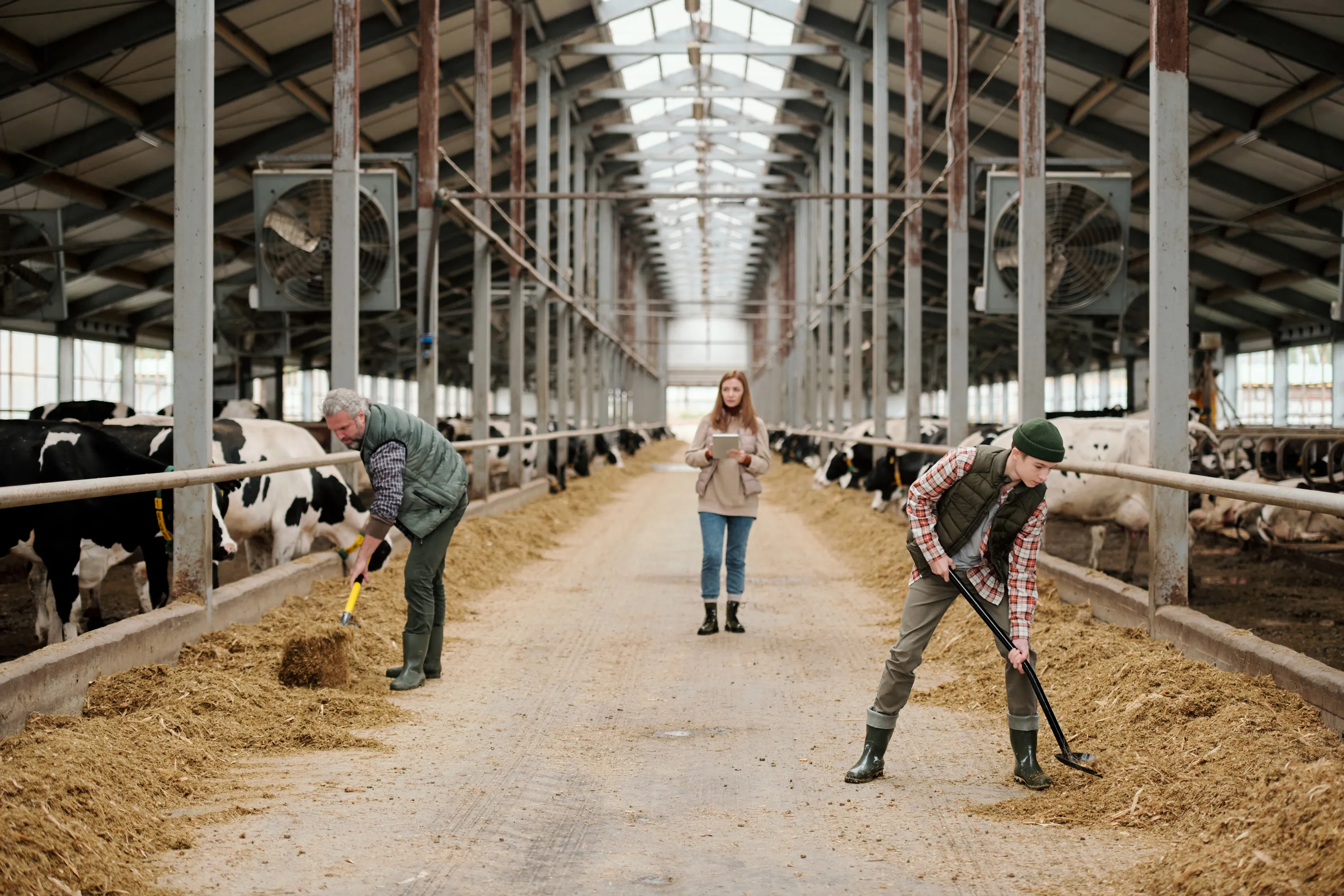
I have supported the UK’s farming sector for over a decade and I know that winter can really test farm life. Buildings with high ceilings that are used for livestock or storage will face low temperatures and rising humidity.
An agricultural heater is a vital piece of machinery to help protect your farm. It is essential for animal welfare and will support growth rates and help protect against disease. It can contribute to the protection of expensive machinery and help to protect timber or steel from humidity.
In this guide, I’ll be diving into the specifics and drawing on field tested data to help you protect your farm against the elements this winter.
Key Takeaways
If you are looking for the shorthand, here are the essential points to remember:
- The Dry Heat Rule: Indirect space heaters are ideal for livestock as they provide clean, dry air and vent combustion moisture outside.
- The Building Decides Which Heater: In a sealed or poorly ventilated space, you must never use a direct space heater due to CO2 and moisture levels.
- Size for the Peak, Not the Average: It’s always better to have two units (like the DXB 100s) running at a reduced capacity than one unit struggling to keep up.
- Don't Waste Your Ceiling Heat: Use a destratification fan (like the Winterwarm DX) to push warm air back down towards livestock.
- Protect Your Assets, Not Just the Air: Remember that thermal zones and infrared heat are best for machinery and workshops
Minimising Energy Waste through Climate Control
During the winter, heating is a necessity on farms. When temperatures drop a newborn will stop growing and use all of its energy to keep warm. Without heating, feed is burnt by the animal just to keep it warm.
While adult cattle are more resilient, heating in cattle housing goes a long way to ensuring stable milk yields.
Compliance and the Duty of Care
Under the Animal Welfare Act 2006, UK producers have to provide a proper environment for their livestock. Failure to do so could lead to audits or legal intervention.
Managing the Climate of Your Storage Area
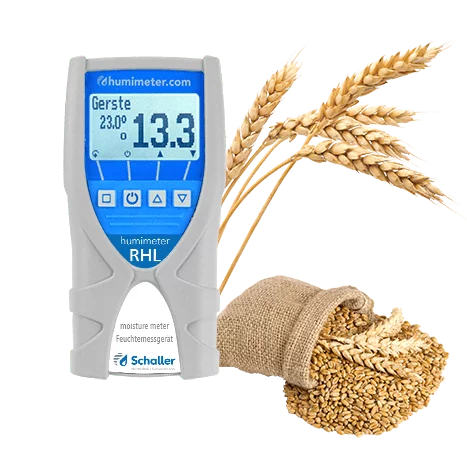
The dew point is the real threat to your stored crops. If the relative humidity drops, your crop will either absorb or release moisture and cause:
- Spoilage: A 5% loss to a 500 tonne grain storage is still a significant hit.
- Combustion: Damp pockets in hay and straw can generate internal heat that left unchecked, can lead to fire.
I recommend indirect space heaters for protection in these areas. They provide clean, dry air and exhaust fumes outside.
Technical Resilience: Safeguarding Machinery
Machinery stored in uninsulated sheds is at risk from thermal cycling. As machinery heats up and cools down it expands and contracts and overtime, leading to failure. Attempting to operate under these conditions can lead to pump failure and blow outs.
Most electrical faults in tractors are caused by condensation. Moisture can cause short circuits and corrode electronics that can bring jobs to a complete stand still.
Strategic Thermal Management
I recommend creating thermal zones instead of trying to heat an entire shed. Using oil or gas fired infrared heaters allows for:
- Pre-Heating Bays: Ensure that tractors and loaders are kept at an optimum temperature for work.
- Workshop Continuity: Cold hands can lead to errors and safety issues, a heated workshop can go a long way to preventing this.
Radiant infrared heat will warm engines and chassis themselves, unlike fan heaters that blow warm air (which will be lost in open spaces).
Workforce Safety & Productivity
Operating machinery and dealing with livestock in cold conditions is risky. A reduced level of concentration due to the cold can lead to slower reaction times and increase the risk of accidents.
Under the Workplace (Health, Safety and Welfare) Regulations 1992, employers have to provide a reasonable working temperature. More advice can be found via the HSE agriculture portal: https://www.hse.gov.uk/agriculture/
The Condensation Trap
Managing Relative Humidity (RH) and the Dew Point is the real challenge for poorly insulated structures. Unmanaged humidity levels can lead to the following failures:
- Structural Degradation: Moisture on metal will accelerate corrosion and shorten the lifespan of the material.
- Rapid Germ Growth: RH levels above 75% contribute to mould growth and pathogens.
- Bedding Saturation: Damp air prevents the evaporation of moisture from straw and leads to caking.
Dry vs. Damp Heat
A common mistake is the use of direct space heaters. These release water vapour and are counterproductive in the winter. For dry heat, you should use indirect space heaters instead. These heaters are a great solution for drawing out dampness from bedding and walls.
Managing Heat and Airflow
The balance between heat and ventilation is the key to moisture management. Try to create a stack effect where warm, moist air rises through vents and is replaced by dry air. You know your ventilation system isn’t doing its job if you can see condensation on your roof sheets.
Selecting the Right Agricultural Heater
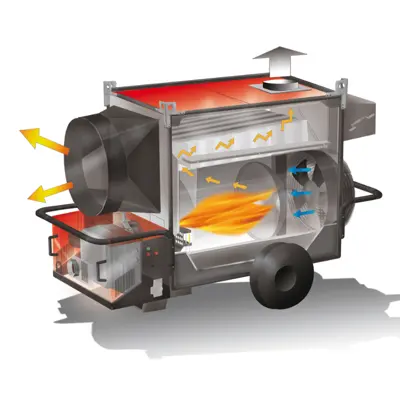
There is a lot more to heating a farm building compared to a domestic setting. Uninsulated spaces require a heater that can not only deliver heat but can balance air quality and fuel efficiency too.
Indirect Space Heaters
An indirect space heater is a bit like a domestic boiler but on a much larger scale. You get 100% clean, dry air with these units as CO2 and water vapour are exhausted via a flue. Perfect for use in lambing sheds or pig nurseries.
Direct Space Heaters
Direct space heaters are the most efficient as all of their energy produced from the fuel stays within its space. However, they should only be used in well ventilated areas due to their CO2 emissions.
Gas Space Heaters
Using either LPG or propane, gas space heaters are favoured for their clean combustion and instant heat response. Although the need for bottles or tanks makes gas the more fixed option.
Calculating Your Thermal Load
Sizing a heater for agriculture is completely different to sizing one for use at home. On a farm you'll be dealing with draughty and poorly insulated areas. To calculate heat load, I suggest look at the following factors:
- The Size of the Space: Because heat rises, a barn with a high roof will be harder to heat as you’re heating the whole barn, not just the floor space.
- The Temperature Lift: If it’s -5°C outside and you want the temperature to be 10°C inside, the heater has to lift the temperature by 15°C. The bigger the gap, the more power you need.
- How Fast Heat Leaks Out: Heat will go straight through the walls of a thin metal shed.
- The Draft Factor: In an open space, with air coming and going, your heater has to reheat new air as fast as it comes in.
Example Calculation
A cattle barn measuring 2,500m³, requiring a lift of 11°C and estimating 70W per cubic metre, use the following formula:
Formula: 2,500m³ × 70W = 175,000W (175kW)
With that result, I would recommend using two 100kW heaters to balance heat distribution. Also, should one unit go down then at least you are left with one functioning unit.
Winterwarm: High-Output Heating & Air Distribution
The Winterwarm DXB series is designed to withstand the day to day life of British farming and can provide heat for 24/7 winter use. Combined with the DX circulation fan, helps to push heat down to where it is needed most.
The Heavy-Duty DXB 100 & 120 Oil-Fired Units
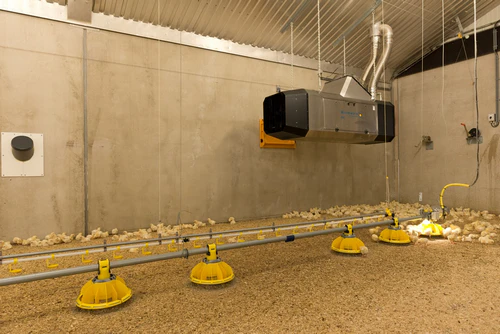
The DXB series use Direct Oil-Fired technology and are built for life on the farm.
- Winterwarm DXB 100 (100kW): Ideal for medium to large sheds and is ideal for frost protection and keeping livestock warm in well ventilated housing.
- Winterwarm DXB 120 (120kW): The DXB 120 provides that extra headroom when facing tough winter conditions.
Both models feature internal components that are resistant to corrosion and are designed to survive the damp conditions of harsh winters.
Winterwarm DX Circulation Fan
One of the biggest mistakes I see people make is ignoring thermal stratification. This is the natural tendency for heat to rise. By mounting a Winterwarm DX Fan to the ceiling, you effectively recycle the trapped warm heat and push it back down to the ground.
For maximum effect, I recommend mounting your DBX heater at one end and spacing DX fans along the centre ridge of your building. This will create a rolling air effect and keep the environment stable.
Frequently Asked Questions
Below I address the most common queries regarding everything from safety to running costs.
Q: What is the best heater for a livestock barn?
A: Because they exhaust all their gases and water vapour through a flue to outside, indirect space heaters are the most popular. The animals receive clean air which is vital for preventing respiratory infections.
Q: Are diesel heaters safe for use in barns?
A: Yes, as long as the heater type matches the ventilation type. These units (just like the winterwarm range) are great for enclosed spaces. Direct fired diesel heaters on the other hand should only be used in semi open areas.
Q: How do you heat a large farm building efficiently?
A: Air management is key to effective heating in large spaces. Make sure you size the heater using the earlier formula and use fans (like the DX fan) to push trapped heat back down to ground level. The use of portable heaters to create thermal zones is also extremely effective.
Q: Which is better, Oil-fired or Gas-fired farm heaters?
A: Neither, this comes down to your environment and logistics. Oil is best for remote buildings while gas is preferred for precision.
Q: Can agricultural heaters really reduce condensation?
A: Yes, they are very effective at reducing condensation. However, the type of heater you choose is critical. An indirect space heater will dry air out, while a direct space heater will actually create more moisture.
Final Thoughts: Building a Climate-Resilient Farm
Winter is the true test of your farm’s infrastructure. And as we have explored, heating is a critical component for the season. Standard heaters fail as they are not designed for the dust and moisture, unlike the Winterwarm examples provided which truly are the best investment you can make.
Why Specification Matters
The difference between a successful winter and a costly one comes down to:
- The Right Tech: Make sure you choose the right type of heater for your environment. If air purity is what you’re after then you know you need an indirect space heater. If you’re after power, then a direct space heater is what you’re looking for.
- Get The Size Right: Ensure you have the thermal headroom to handle the size of your space, and remember two units will perform better than one.
- The Right Distribution: Use circulation fans (like the Winterwarm DX fan) to get costly heated air warming more than just the roof tiles.
At National Heater Shops, our team of technical experts can help you calculate what size heater you need for your space. We offer a price match Promise and with rapid UK delivery to ensure your farm stays warm this winter.