


Buying Guide for the Best Wall-Mounted Air Conditioner in the UK
Date: 19 February 2025
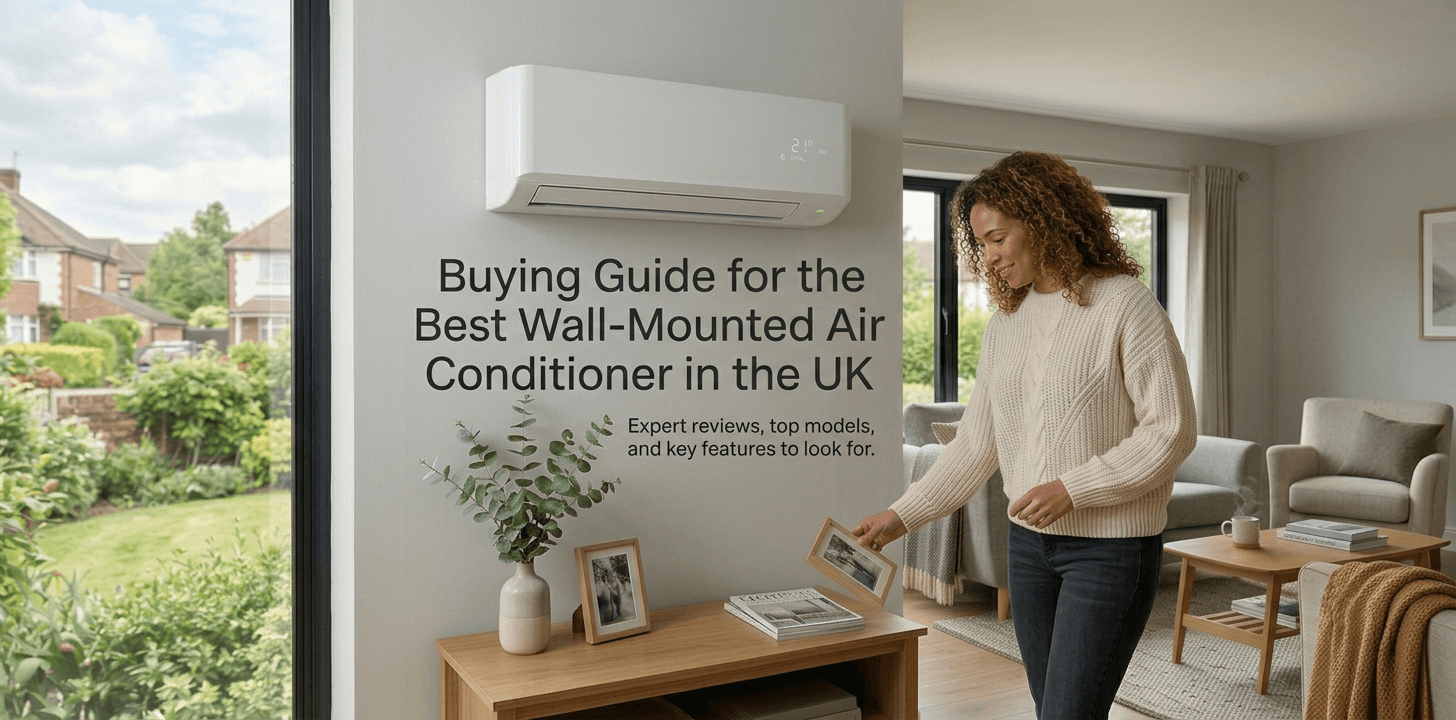
With UK summers getting warmer each year, residents are researching more efficient and reliable cooling systems. One of the most reliable ways to cool a space remains wall-mounted air conditioning systems. Seen as a more traditional cooling method than modern portable cooling systems, wall-mounted air conditioning (also known as split systems) is often found in homes and commercial buildings. Wall-mounted air conditioning systems have a reputation for being a complete climate control solution as it delivers powerful cooling and heating.
Wall-mounted air conditioning units are multi-purpose split air conditioning units that offer better cooling than fans and operates quieter than portable cooling units. What makes a wall-mounted air conditioner a split air conditioner is the fact that it has an indoor cooling unit, which is usually mounted high up on the wall, and an outdoor condensing unit that vents hot air out of the building. Having these two units allows for greater space saving as they do not take up any indoor floor space.
Choosing a wall-mounted air conditioning unit for your space can be difficult, though. There are many factors that you need to consider, including the size of the space you are cooling, your energy constraints, and the installation requirements. All of these factors can be overwhelming, but throughout this article, we will break them down into easy-to-understand concepts that will help you make the best purchasing decision when choosing a wall-mounted air conditioner.
Primary Benefits of Wall-Mounted Air Conditioners?
Consistent and Powerful Cooling
Wall-mounted air conditioning units provide targeted cooling for a space. The high mounting and split system design means it can distribute air effectively and evenly throughout the space. Fixed cooling systems like this also deliver much more rapid cooling thanks to a ductless design. This means that cooling is almost instant. Spaces can also be kept at a constant temperature as the indoor unit can be set to a desired temperature.
Energy Efficiency
Modern wall-mounted air conditioning units are extremely energy efficient due to the use of inverter technology. An inverter air conditioning unit does not have to cycle on and off to cool a space. Instead, power is adjusted based on the cooling demand, using less electricity than traditional air conditioners.
Space-Saving and Aesthetic Design
The best air conditioning units for home and office use save on energy expenditure and on space. Wall-mounted air conditioning units do this by mounting the indoor unit high on a wall on the inside of a building. Being mounted high up means that it takes up no space and blends in with a room’s design features. Having the condenser unit on the outside, connected to the indoor unit with refrigerant pipes, means that the indoor unit can be kept compact and sleek.
Dual Cooling and Heating Functions
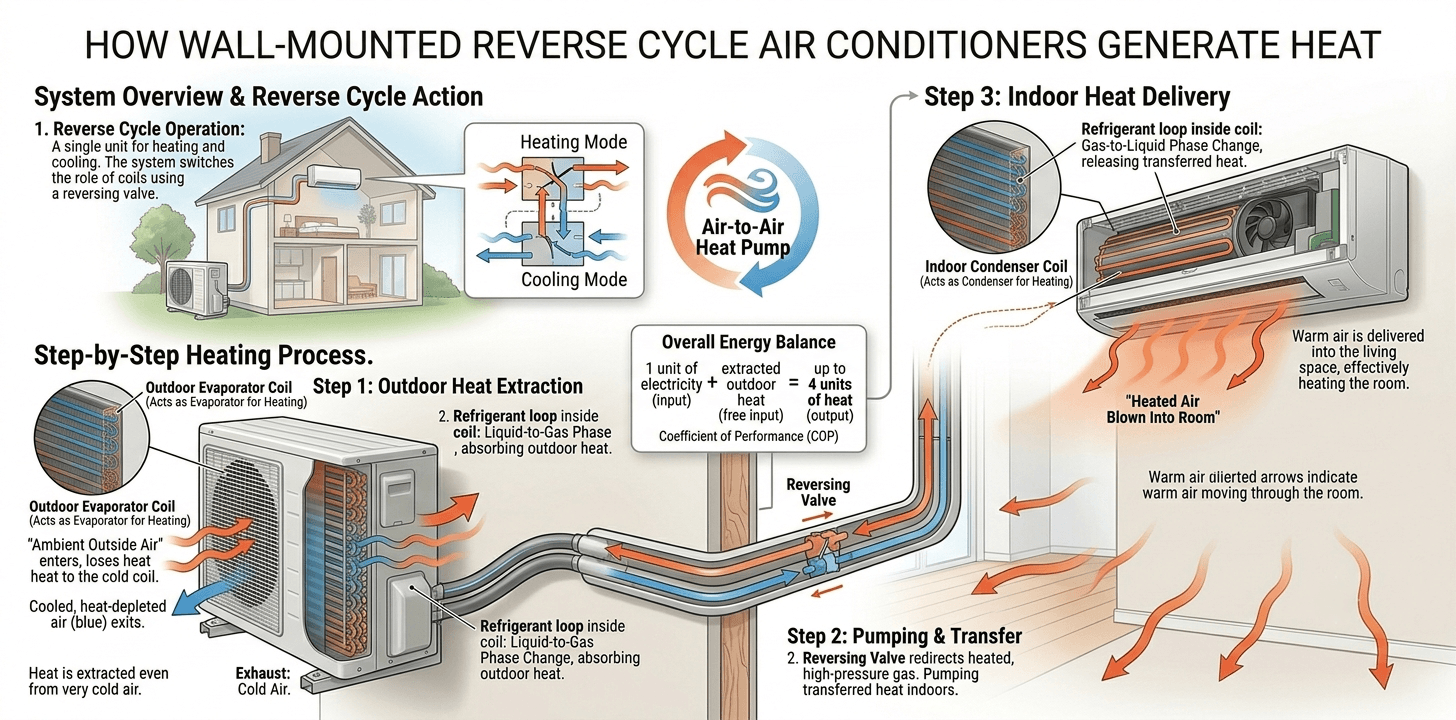
A demand is growing across the UK for air conditioners that provide both cooling and heating. An air conditioner with heating solves all your climate control needs year-round. It provides cooling in the summer and much-needed heating in the frigid UK winters without needing an additional heating system. It does this using air-to-air heat pumps that draw air in through the outdoor unit. This air is then passed through the air-to-air heat pump, where it is heated to a desired temperature that is set by the indoor unit.
Less Operating Noise
Air conditioner condenser units are noisy due to the refrigeration process taking place within. This noise can be highly disruptive in an office environment where noise levels are restricted for productivity, or in homes where noise levels must be kept low for comfort. Wall-mounted air conditioners solve the problem of noise from condenser units by installing them on the outside of the building. By placing the condenser unit on the outside of the building, the only noise heard from the indoor unit is the air gently blowing into the space. This makes it the best low-noise air conditioner option for spaces where noise levels are controlled.
Better Air Quality
Wall-mounted air conditioners are equipped with advanced air filtration systems that clean the air it vents into your space. As air is drawn in from outside through the condenser unit, the air is passed through the filters, which remove harmful dust, pollen, and allergens. Because of these advanced filters, stale air is not constantly recirculated throughout a space.
Explaining How Wall-Mounted Air Conditioners Work
The Split System Design
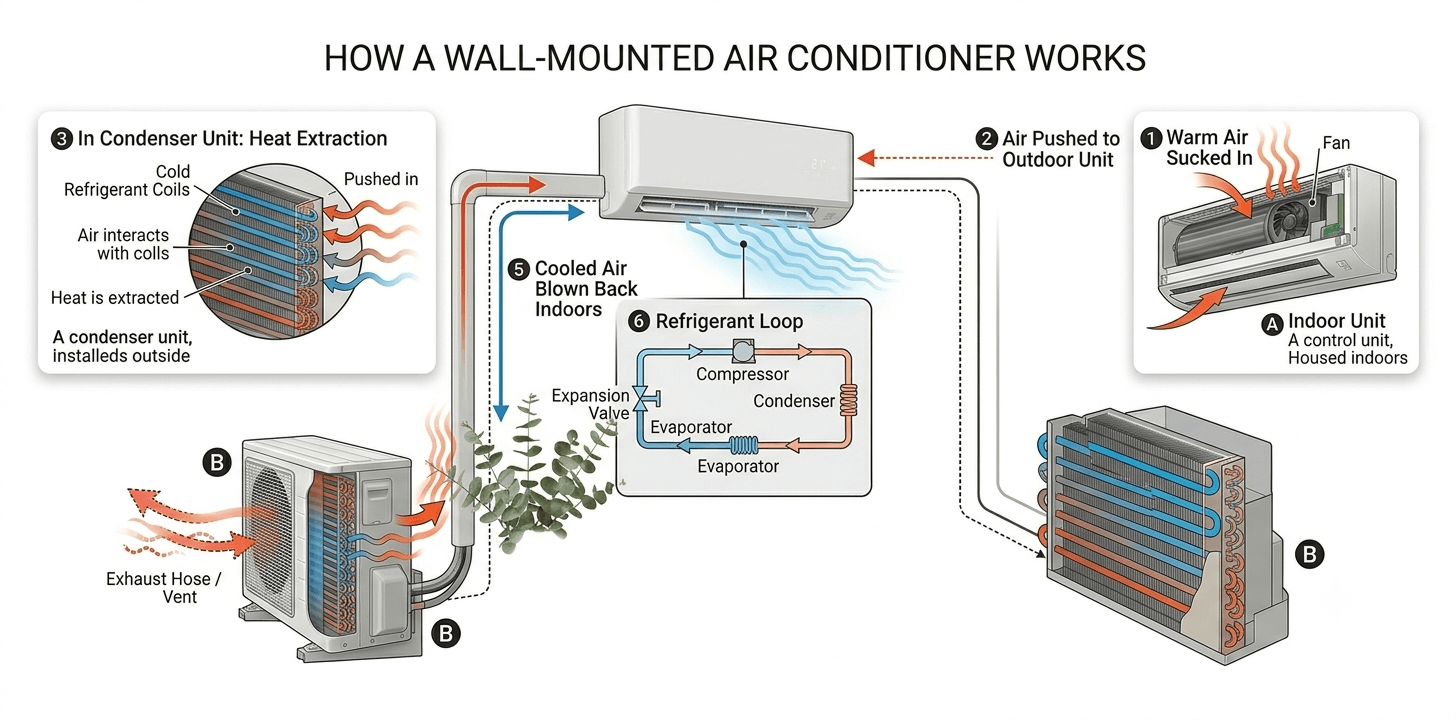
Wall-mounted air conditioners are comprised of two units.
A control unit (Housed indoors)
A condenser unit (Installed outside)
Wall-mounted air conditioning systems work as follows:
Warm air is sucked in from the room by the indoor unit.
That warm air is then pushed into the outdoor condenser unit.
In the condenser unit, the warm is pushed through cold refrigerant coils. As the air interacts with the coils, the heat is extracted from the air.
Once cooled, the cool air is blown back into the room via the indoor unit, while the heat is vented out of the condenser unit via an exhaust hose.
Indoor Control Unit
Also called the evaporator and control unit. This unit is mounted high up on the inside of the building. The indoor unit sucks in warm air to start the process and blows cool air back into the room.
The indoor unit also allows you to control your air conditioning system, either via a control panel on the unit or via a remote control.
Outdoor Condenser Unit
This unit is installed on the outside wall and connected to the indoor unit via refrigerant pipes. Housed in the condenser unit is the compressor that pumps the refrigerant through the system, and the condenser unit that vents the heat out via the exhaust hose.
What to Consider Before Buying a Wall-Mounted Air Conditioner
Room Size and Cooling Capacity
Like with any air conditioning system, you need to ensure that you pick a wall-mounted air conditioning system that has an air output that is matched to your room size. In simple terms, all air conditioning systems have a certain air output rating (measured in BTU). Certain room sizes require certain BTU ratings to cool that room. An example of this is a small room of 150-250 square feet requiring a minimum of 5000 BTU to effectively cool that room. We have included an air conditioner size guide to help you select the best wall-mounted air conditioning system:
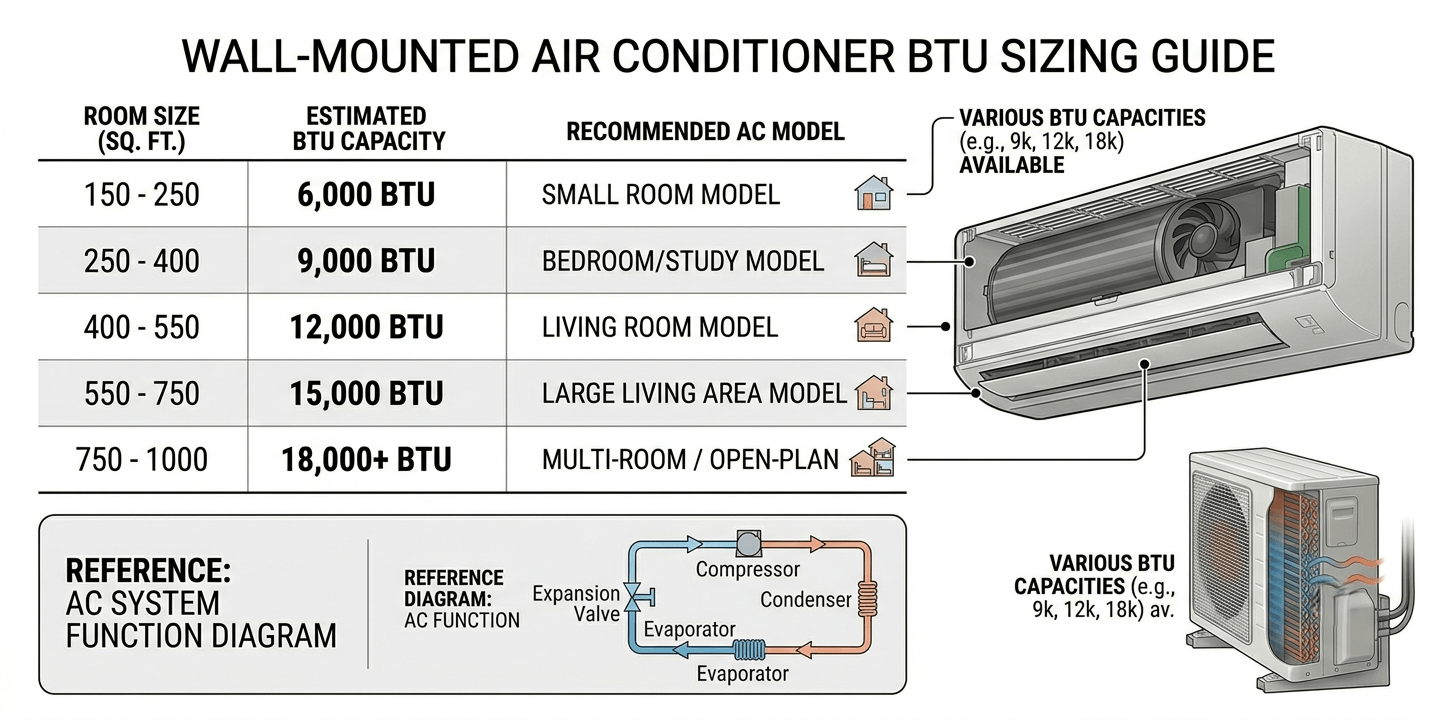
We also have a handy BTU calculator that we highly recommend you check out to help you work out the correct air conditioning sizing requirements.
Single-Split vs Multi-Split System
Single-Split System: These wall-mounted air conditioning systems have one indoor unit connected to one outdoor unit. This is perfect for cooling single rooms or small spaces.
Multi-Split System: In these wall-mounted air conditioning systems, one outdoor unit is connected to multiple indoor units. This is perfect for cooling multiple rooms using just one outdoor condenser unit.
Energy Requirements and Efficiency
The rising cost of living and increasing energy costs mean that it is important to find a wall-mounted or fixed air conditioning system that meets specific energy requirements.
A few things to consider when looking for an energy-efficient wall-mounted air conditioning system include:
SEER Rating: The Seasonal Energy Efficiency Rating (SEER) is a measurement of cooling efficiency for air conditioning units. It takes the total air output (BTU) and divides it by the energy used (measured in watts per hour). Higher SEER ratings equal a more energy-efficient unit, while lower ratings can cost 10-20% more on electricity bills for every rating lower.
SCOP Rating (For Units that Provide Heating): Much like the SEER rating, the SCOP rating (Seasonal Coefficient of Performance) is a measurement of a heat pump’s average heating throughout a particular season. Higher SCOP ratings mean greater energy savings and more efficiency.
Inverter Compressor: A wall-mounted air conditioner that uses an inverter compressor is more energy efficient because it will cycle the power of the unit based on cooling needs.
Eco Mode: Opting for a wall-mounted air conditioner that features an eco-mode allows for even greater energy efficiency.
Noise Level
Indoor noise levels must meet certain requirements for both residential and commercial spaces. Because of this, you want to find a wall-mounted air conditioning system that has a low noise rating, quiet fan settings, and dedicated sleep modes. These features will ensure a unit that meets indoor noise level restrictions.
Heating Function
While air conditioners are mainly used to cool spaces, modern units can also heat spaces. When choosing a unit that can both cool and heat your space, consider the following:
Reverse cycle operation: Air conditioning systems using this operation reverse the refrigerant cycle to heat air. In this system, the evaporator and condenser switch roles, depending on whether it is cooling or heating. For heating, heat is extracted from the outside and pumped into the room via the indoor unit. This is usually done using an air-to-air heat pump.
Installation Requirements
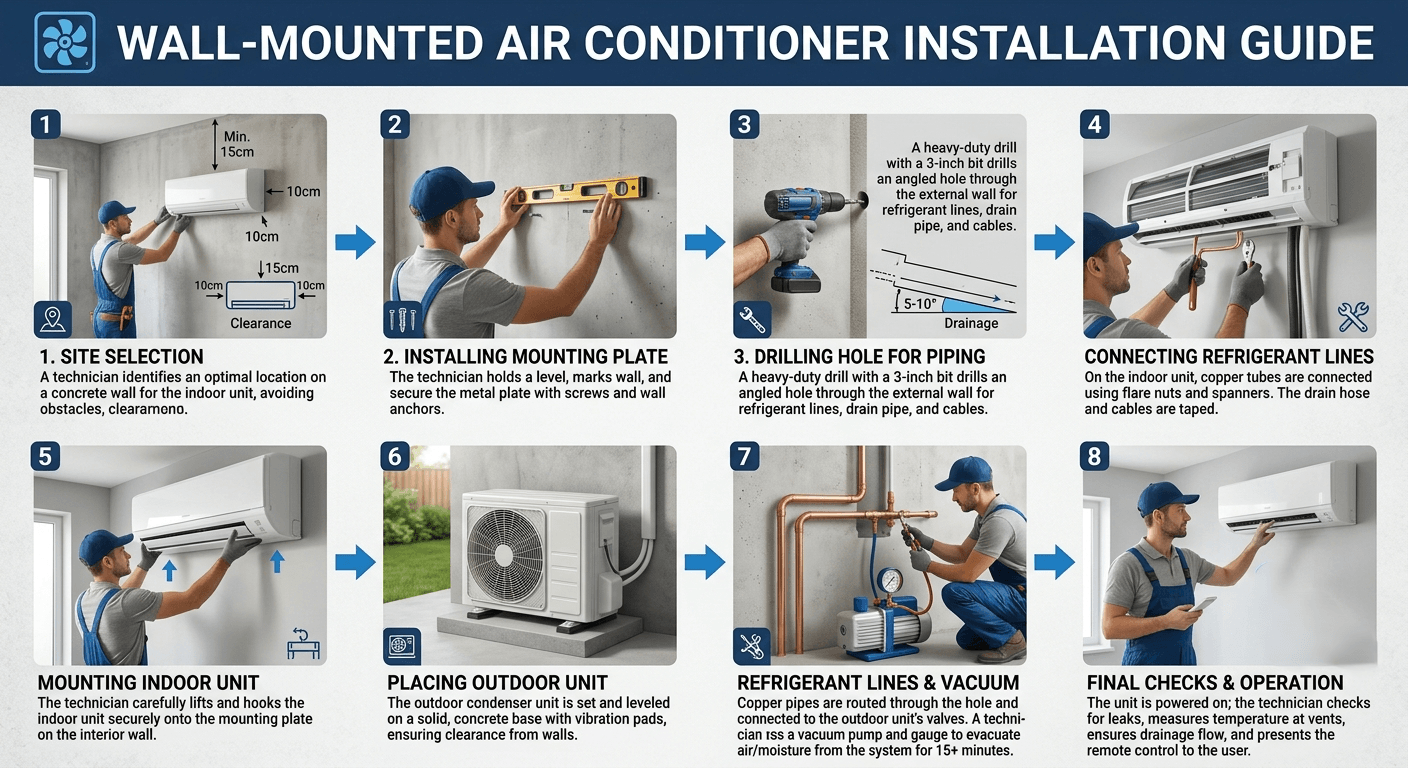
Wall-mounted air conditioners require professional installation by trained HVAC technicians. This is because an opening must be made in the wall for the units to be slid in. Once the unit is positioned, the gaps must be sealed to prevent air and moisture from coming in. When purchasing a wall-mounted air conditioner, the installation costs must be factored into the price of the unit. It is recommended that you contact an HVAC professional for a comprehensive quote before purchasing your unit.
Operating Costs
The running cost of a wall-mounted air conditioner can vary by wattage and energy tariff. Despite this, modern units are still more cost-effective than more traditional models.
Factors that influence the long-term operating cost of a wall-mounted air conditioner include:
The size of the unit
Energy efficiency ratings
Room insulation
How long the unit has been in use
Temperature settings
Maintenance conditions
Additional Features
To increase the comfort and ease of use of modern fixed air conditioning systems, many have advanced features such as:
Wi-Fi control
App scheduling
Motion sensors
Smart temperature control
Voice activation
Energy monitoring
Remote diagnostics
Not only do these features make your unit easy to use, but they can also increase its efficiency and lifespan.
Wall-Mounted Air Conditioners Compared to Other Cooling Methods
Wall-Mounted Air Conditioner vs Cooling Fan
Feature | Wall-Mounted AC | |
|---|---|---|
Actually lowers the room temperature | Yes | No |
Best for heatwaves | Yes | Limited |
Running cost | Higher than the fan | Very low |
Installation | Professional | None |
Comfort level | High | Basic |
Wall-Mounted Air Conditioner vs Evaporative Air Cooler
Feature | Wall-Mounted AC | |
|---|---|---|
Best climate | Works in most indoor settings | Best in dry heat |
Cooling method | Refrigerant-based cooling | Water evaporation |
Humidity impact | Can dehumidify | Adds moisture |
UK suitability | Strong option for humid days | Less effective in humid conditions |
Installation | Fixed | Usually, portable |
Wall-Mounted Air Conditioner vs Portable Air Conditioner
Feature | Wall-Mounted AC | |
|---|---|---|
Better For Long-Term Use | Yes | No |
Better For Rental Properties | No | Yes |
Efficiency | More efficient and quieter | Less efficient and noisier |
Installation | Professional | Plug-and-play |
Running Cost | High-maintenance cost | Minimal maintenance cost |
Best Use Cases for Wall-Mounted Air Conditioners
Bedrooms
When choosing a wall-mounted air conditioning unit for your bedroom, prioritise quieter units that feature a compact design with sleep mode and are more energy efficient.
Living Rooms
For living rooms, opt for a unit with a higher BTU rating, has wide-angle airflow, smart controls, and good seasonal efficiency.
Home Offices
Home offices are becoming increasingly popular, and to cool them with a wall-mounted air conditioning unit, purchase one that features quieter operation, timer settings, app control, and lower running costs.
Large Rooms
Larger rooms have greater cooling requirements; as such, you want to opt for higher kW output, good air distribution, and a powerful fan mode.
Buying Guide Checklist
Buying Factor | What to Check |
|---|---|
Room size | Match kW or BTU output to the space |
Noise level | Choose low dB for bedrooms and offices |
Energy efficiency | Look for strong SEER/SCOP ratings |
Heating mode | Useful for year-round comfort |
Smart controls | WiFi, app control, timers, scheduling |
Installation | Confirm pipework, drainage, and outdoor unit placement |
Warranty | Check the manufacturer and installer cover |
Maintenance | Ask about servicing and filter cleaning |
Budget | Compare unit, installation, and running costs |
Brand support | Choose a brand with parts and installer availability |
How Do You Choose the Best Wall-Mounted Air Conditioner?
The best wall-mounted air conditioner will depend entirely on your needs. Factors such as room size, comfort needs, budget, and installation requirements will play a major role in determining what the best wall-mounted system is for you. While some units have better energy efficiency ratings, other units might have better cooling capacity or smart features. Ultimately, you need to consider all your options when choosing the best wall-mounted air conditioner for your needs.
In case you need some help comparing the various wall-mounted air conditioning units on the market, contact us to speak to a qualified HVAC professional. Alternatively, if you already know what kind of unit you need, head over to our wall-mounted air conditioning section, where you will find a great selection of brands and units for every need.
Frequently Asked Questions About Wall-Mounted Air Conditioners
What is the best wall-mounted air conditioner for home use?
There is no single wall-mounted air conditioning unit that is the best solution. Choosing the best wall-mounted air conditioner for your home is dependent on factors such as the size of the room you need to cool, the required cooling capacity, installation layout, and your budget.
Are wall-mounted air conditioning units better than portable air conditioning units?
A wall-mounted air conditioner is better for long-term use. This is because wall-mounted air conditioners are quieter, more efficient, and more powerful than portable air conditioners.
Is it necessary for wall-mounted air conditioners to have an outside unit?
Split system wall-mounted air conditioners must have an indoor and an outdoor unit. Most wall-mounted air conditioners on the market are split systems, meaning that most wall-mounted units must have an outdoor unit.
Are wall-mounted air conditioners expensive to install?
Wall-mounted air conditioning has a high upfront cost for installation, but the exact cost depends on the size of the unit, the distance of the pipework, electrical requirements, and installation complexity.
How big should my wall-mounted air conditioner be?
The size of the wall-mounted air conditioner you purchase depends on the size of the space you need to cool, the height of the ceiling, insulation, and how the space is used. Small rooms typically require a 2.0-2.5 kW unit, while larger rooms require a 3.5-5.0 kW unit or stronger.